When people hear the words “Law of Attraction,” they often think of modern-day gurus, vision boards, or books like The Secret. But what if we told you this “modern” concept has roots thousands of years old right here in India?
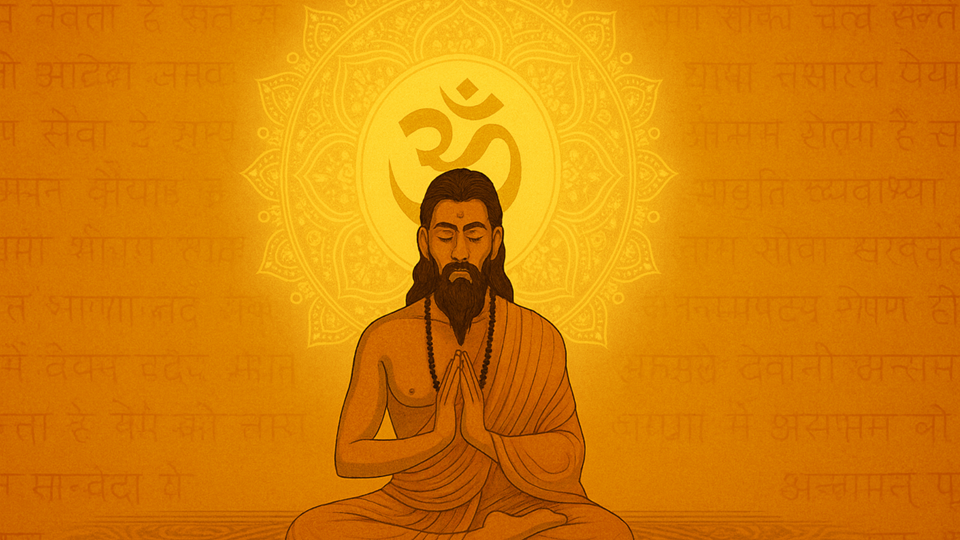
Long before hashtags and self-help shelves, the Vedas spoke about संकल्प (Sankalpa: intention), मानस (Manas: mind), श्रद्धा (Shraddha: faith), and भावना (Bhavana: feeling). These ancient texts weren’t just spiritual; they were vibrational blueprints of human consciousness. They taught that your thoughts don’t just stay in your head they create ripples in the fabric of reality.
Today, we’re in the age of manifestation, but our ancestors were already doing it with discipline, devotion, and deep understanding. They knew the power of spoken word (mantra), the strength of aligned action (karma), and the necessity of mental purity.
In this blog, we’ll explore how Vedic wisdom supports and even strengthens our understanding of manifestation. You’ll discover that Law of Attraction isn’t new it’s eternal. And by blending ancient insight with modern practice, your manifestation journey can become more aligned, sacred, and powerful.
Let’s begin where it all began with the mind, intention, and vibration.
What the Vedas Say About Thought, Vibration, and Reality
“यद् भावं तद् भवति” (Yad Bhāvam Tad Bhavati)
– as you believe, so shall it be.
This simple Sanskrit line from the Vedas sums up what the world now calls the Law of Attraction.
The Vedas hold a deep understanding of how our inner state influences the outer world. They emphasize that Manas (mind) is not just for thinking it is a creative force. Every thought you think is a spandan (vibration) that interacts with the universe. These vibrations are not symbolic they are real, energetic emissions shaping your reality moment by moment.
Where modern LOA talks about “vibration,” the Vedas talk about Rasa (emotional flavor), Bhava (emotive state), and Shraddha (faith-energy). The idea is clear: if your thoughts are weak, scattered, or fear-based, you attract confusion. If your thoughts are strong, focused, and infused with belief, you attract clarity and results.
Another key concept is चित्त (mind) – the memory imprints stored in our subconscious. In modern terms, this is what controls our repeated patterns and beliefs. The Vedas encouraged purifying the चित्त (mind) through meditation, mantra, and sankalpa to change the direction of one’s life.
The wisdom is timeless: your reality is nothing but the extension of your inner frequency. And when you consciously shift your internal state, the universe has no choice but to respond.
Ready to go deeper? Let’s understand Sankalpa next one of the most powerful manifestation tools from Vedic tradition.
Sankalpa – The Ancient Practice of Setting Intention
In the world of modern manifestation, we often hear about goal setting, affirmations, or scripting your future. But the Vedas had a much deeper, spiritually rooted version of this: Sankalpa.
Sankalpa comes from two Sanskrit roots San (a connection with the highest truth) and Kalpa (a vow or promise). It’s not just a wish or goal it is a solemn, soul-aligned commitment made from the heart. In yogic practices, a sankalpa is set before every session, silently reaffirming: “I am becoming who I am meant to be.”
Unlike mere resolutions that fade with time, a sankalpa is treated as truth. It is stated in the present tense, with unshakable belief. Example:
“I am healthy, vibrant, and full of life.”
“I attract loving, respectful relationships.”
This aligns exactly with LOA principles: speak as if it’s already done. But here’s what makes the Vedic way powerful: a sankalpa is always tied to your dharma: your higher purpose. It’s not about ego-based wants; it’s about soul-aligned desires (refer section 2).
The practice is simple yet profound: sit quietly, close your eyes, place your hand on your heart, and declare your sankalpa daily: at the same time, in the same place. This consistency weaves your intention into the fabric of time and space.
In short, sankalpa is not about asking the universe for something. It’s about becoming the person who naturally attracts it.
Karma, Kriya, and Conscious Action in Manifestation
One of the biggest criticisms of the Law of Attraction is that it promotes “wishful thinking.” People believe it says: “Just think good thoughts, and everything will come to you.” But the Vedas never allowed for such passivity.
In Vedic philosophy, Karma is the bridge between thought and outcome. It simply means action. Your karma is your choice. Your kriya is your ritual. And both are essential to manifestation.
While your thoughts initiate the process (refer section 2), it is your actions that anchor it into the physical realm. You can visualize abundance all day, but if you don’t act on inspired opportunities, the universe has nothing to respond to.
Here’s the beauty: Vedic rituals (kriyas) were not about pleasing gods. They were designed to align your energy, purify your focus, and increase tapas (inner fire). Think of kriya as the energetic “Doer” inside you, preparing you to receive what you’ve asked for.
This principle beautifully parallels what we call aligned action in LOA. The Vedas taught:
“न हि कल्याणकृत्कश्चिद्दुर्गतिं तात गच्छति।” (Gita 6.40)
No effort made on the spiritual path ever goes to waste.
So when you dream of something, you must also act as if it’s coming. Not from pressure, but from energetic alignment. Thought creates the desire, but karma brings it home.
In the next section, we’ll explore one of the most powerful action-based tools in Vedic manifestation mantra and sound vibration.
The Power of Sound – Mantras and Vibration as Tools for Manifestation
Everything in existence vibrates. And sound is the most ancient, purest form of vibration. The Vedas recognized this long before science did. In fact, the universe itself was said to begin with a sound: “ॐ” the primordial vibration.
According to Vedic wisdom, Mantras are not just chants. They are vibrational codes that carry specific frequencies designed to influence energy fields, both within and around us. Each syllable of a mantra is believed to awaken specific neural, spiritual, and emotional responses. Modern science supports this idea studies in cymatics (the study of visible sound vibrations) and Dr. Emoto’s water crystal experiments show that sound can indeed organize matter and affect its structure.
When we chant a mantra like “ॐ श्रीं महालक्ष्म्यै नमः” (Om Shreem Mahālakṣmyai Namaḥ) with devotion and focus, we’re not just calling for wealth we’re attuning our body-mind-spirit system to the frequency of abundance.
This aligns beautifully with LOA techniques like affirmations and subliminals. In both traditions, the spoken word is treated as creative power. The only difference is that the Vedic approach is older, more refined, and often backed with thousands of years of consistent practice and observation.
If affirmations are modern-day keys, mantras are ancient master keys. Both work but with mantras, you’re not just repeating words you’re unlocking energies embedded deep in consciousness.
Next, let’s see how devotion and gratitude were built into this practice through Bhakti.
The Role of Gratitude and Bhakti in the Vedic Tradition
Gratitude is one of the highest vibrational emotions in Law of Attraction and the Vedas knew this deeply. In fact, भक्ति (Bhakti – pure devotional love) is not just a spiritual path; it is an emotional frequency of trust, surrender, and deep appreciation.
Where LOA suggests journaling gratitude lists, Vedic rituals involved अर्पण (Arpan – offering), जप (Japa – chanting), पूजा (Puja – sacred ritual), and सेवा (Seva – selfless service). These weren’t about appeasing deities they were about aligning oneself with the energy of receiving. Every offering made with a grateful heart was a declaration: “I already have, and I am open to more.”
As described in the श्रीमद्भगवद्गीता (Shrimad Bhagavad Gita), Lord Krishna says:
पत्रं पुष्पं फलं तोयं यो मे भक्त्या प्रयच्छति।
तदहं भक्त्युपहृतम् अश्नामि प्रयतात्मनः॥
(Patram pushpam phalam toyam yo me bhaktyā prayacchati
Tad ahaṁ bhakty-upahṛtam aśnāmi prayatātmanaḥ)
“Even a leaf, a flower, a fruit, or water when offered with devotion I accept it from the pure-hearted.”
That’s pure Law of Attraction. It’s not about how big your action is. It’s about the ऊर्जा (energy) behind it.
कृतज्ञता (Kritajñatā – gratitude) elevates your vibration. भक्ति (Bhakti – devotion) sustains it. And both together become a powerful magnet for manifestations. When you feel thankful in advance whether through words, emotions, or rituals you signal to the universe that you are in receiving mode.
While gratitude journals are excellent (and you should use them), try also lighting a दीया (Diya – lamp), offering a पुष्प (Pushpa – flower), or chanting a मंत्र (Mantra) with closed eyes. These are not religious obligations they are energetic acknowledgments of abundance already flowing to you.
Do These Ancient Teachings Hold Up Today?
In the modern world, people want proof. “Does manifestation actually work?” they ask. The Vedas never shied away from science they were science. And now, slowly but surely, modern science is catching up to what the ऋषि (Ṛṣi – sages) taught millennia ago.
Let’s start with quantum physics. The observer effect suggests that the act of observation influences reality. In simpler terms, what you focus on shifts. This echoes the Vedic teaching:
यद् भावं तद् भवति (Yad Bhāvam Tad Bhavati – as you believe, so shall it be).
Another concept, energy fields, now widely accepted in neuroscience and biology, supports the idea that everything is vibrating including our thoughts and emotions. The वेद (Vedas) consistently taught that thoughts are not passive; they are energetic स्पंदन (Spandan – vibrations) that affect both your inner state and outer world (refer section 2).
Even mantra science is getting validation. सायमेटिक्स (Cymatics) shows how sound organizes matter into symmetrical forms. Japanese researcher Dr. Masaru Emoto’s जल क्रिस्टल प्रयोग (water crystal experiments) revealed that words of love or hate changed water’s structure dramatically proving that emotion and sound alter physical reality.
So yes, the ancient teachings of संकल्प (Sankalpa), कर्म (Karma), मंत्र (Mantra), and भक्ति (Bhakti) are not just spiritual they are biological, neurological, and quantum truths in action.
In short, Vedic manifestation is not blind faith. It is a system that aligns your mind, energy, and action with the subtle mechanics of the universe.
Now, let’s make this personal with a practical routine you can begin today.
Your Vedic Manifestation Ritual
It’s one thing to understand these ancient principles. It’s another to live them. So here’s a simple, grounded daily ritual to help you manifest using Vedic wisdom blended with Law of Attraction.
1. प्रातः संकल्प (Morning Sankalpa – Intention Setting)
Upon waking, sit quietly and place your hand on your heart. Speak your संकल्प (Sankalpa) in present tense with conviction.
Example:
“मैं आत्म-विश्वास से भरा हुआ हूँ।” (I am filled with self-confidence.)
2. मंत्र जप (Mantra Japa – Vibration Alignment)
Chant a relevant बीज मंत्र (Beej Mantra) at least 11 times. For abundance, try:
ॐ श्रीं महालक्ष्म्यै नमः (Om Shreem Mahālakṣmyai Namaḥ)
Let the vibration settle in your being.
3. कर्म आधारित कार्य (Karma-Aligned Action)
Take one inspired, meaningful step toward your goal. This could be writing, applying, sharing, or serving whatever feels aligned (refer section 4).
4. सायं कृतज्ञता (Evening Gratitude Ritual)
Light a दीया (Diya) or sit silently. Mentally thank 3 things that happened today. Offer this feeling to the universe as an energetic completion of the day.
Do this consistently for 21 days. You’ll not just manifest differently you’ll live differently. Remember: The ऋषि (Rishis) didn’t “wish” for things. They became the vibration of what they desired.
Conclusion:– Returning to Our Timeless Wisdom
In our quest for abundance, love, health, or success, we often look outward toward books, coaches, and courses. But the deepest, most aligned answers have always been within our culture, within our संस्कृति (Sanskriti – heritage), and within our शास्त्र (Śāstra – sacred texts).
The वेद (Vedas) don’t just echo the Law of Attraction they expand it, deepen it, and root it in a soulful, conscious path. From the clarity of संकल्प (Sankalpa) to the power of कर्म (Karma), from the vibration of मंत्र (Mantra) to the devotion of भक्ति (Bhakti) our ancestors created a system where desire was not suppressed, but refined. Not ego-driven, but soul-aligned.
The modern LOA movement has gifted millions with hope. But when you walk that same path with Vedic insight, something changes it becomes sacred. You begin to manifest not just what you want, but what truly belongs to you. What’s dharmic. What’s divine.
So, take this as your reminder not everything ancient is outdated. And not everything modern is complete.
You are not just a manifestor.
You are the living continuation of a timeless, vibrational science.
And as the ऋग्वेद (Rigveda) says:
“आ नो भद्राः क्रतवो यन्तु विश्वतः।”
(Ā no bhadrāḥ kratavo yantu viśvataḥ)
“Let noble thoughts come to us from all directions.”
You are ready. Begin your practice. Manifest not just with desire, but with साधना (Sādhanā – sacred discipline).
Table of Contents