Why Political Unrest Feels So Heavy on Your Mind
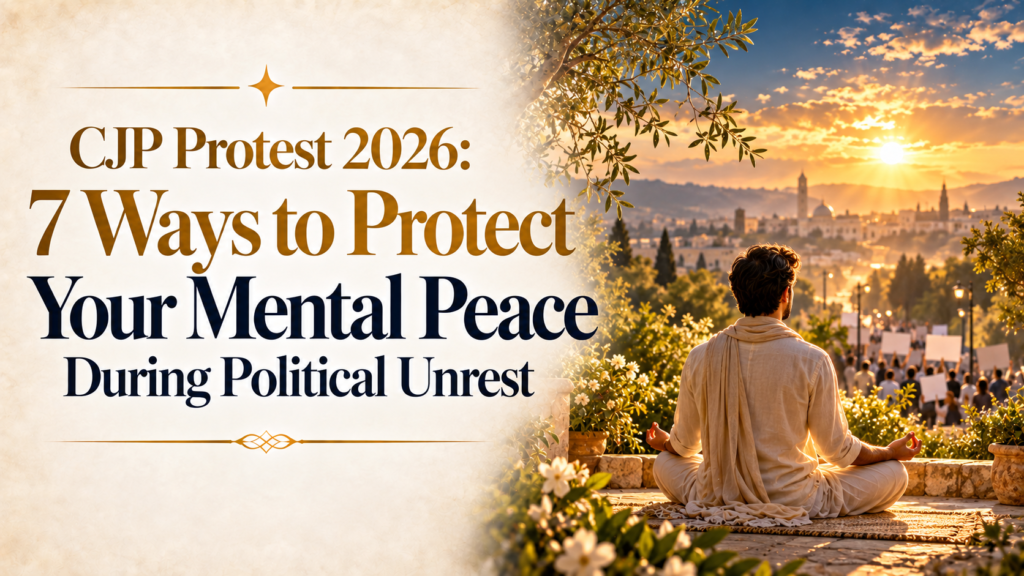
If the CJP protest 2026 headlines leave your chest tight and your thumb glued to the refresh button, you are not weak, and you are not alone. Political stress is real, it is physical, and right now it is travelling through family WhatsApp groups, office canteens, and late-night timelines across India.
The Cockroach Janta Party (CJP) began in May 2026 as online satire and grew into a youth-led protest movement. By 10 October 2026, its planned demonstration in Delhi was making headlines around the world, along with road closures, detentions, and a mobile internet restriction in parts of the capital. Whatever you think about the issues, millions of people are asking the same quiet question: how to stay calm during protests and political unrest when the news never stops?
That is what this guide is for. You will not find a political argument here. You will find seven practical, kind and doable ways to protect your mental peace, drawn from meditation, affirmation, visualization, the law of attraction and everyday stress management. These are the same themes that run through the work of Dr Amiett Kumar, the manifestation and meditation coach known to millions through YouTube, podcasts and the Readers Books Club.
The 7 Ways at a Glance
- Build a mindful news diet
- Practise mindfulness meditation for anxiety
- Use affirmations for mental peace
- Visualise calm for mental clarity
- Apply the law of attraction to what you can control
- Protect your body, sleep and daily routine
- Stay connected, talk kindly and ask for help when you need it
Grab a cup of tea, take one slow breath, and let us begin.
CJP Protest 2026 and Political Anxiety: What Is Going On Inside Us
A Brief, Neutral Background
Here is the context in plain terms, so we are all starting from the same page. The CJP launched online on 16 May 2026 as a satirical “party” for young, unemployed, and frustrated Indians. Its first street protests at Jantar Mantar, on 6 and 20 June, focused on exam-paper leaks, and the education minister resigned on 25 July. The movement then turned to other issues, including the revision of electoral rolls.
On 10 October, the CJP planned a protest in Delhi demanding the resignation of the Chief Election Commissioner. According to Reuters and other reports, police refused permission, security was tightened across central Delhi, thousands of people were reportedly detained, and mobile internet was suspended for 24 hours within a four-kilometre area. Organisers said their protest was peaceful. Authorities cited public order. The Election Commission and the ruling party reject claims of manipulation.
We are not here to judge any of this. Events are moving quickly, so please check reliable, current news sources. What matters for this guide is the effect all of it has on your nervous system, wherever you stand.
What Is Political Stress?
Political stress is the tension, worry and emotional exhaustion that builds when public events feel threatening, unpredictable, or out of your hands. Political anxiety is the same experience when it tips into constant worry, poor sleep, or a feeling of dread.
You do not have to be at a protest to feel it. You can feel it from your sofa, your phone and your family group chat.
Why Your Brain Reacts This Way
Your brain is built to scan for danger. Three things make unrest especially hard on it:
- Uncertainty. The mind dislikes not knowing what happens next more than it dislikes many known problems. Rumours, closures, and communication blackouts feed that uncertainty.
- Negativity bias. We notice and remember threats more than good news, so a feed full of conflict feels like a world full of conflict.
- Endless scrolling. Social platforms reward strong emotion. Every refresh offers another jolt, which creates what many people call news anxiety or doomscrolling.
Signs Your Mental Peace Is Slipping
Notice if you recognise any of these in the past week:
- Checking your phone first thing in the morning and last thing at night
- Racing thoughts, trouble falling asleep or waking at 3 a.m.
- Snapping at family or friends over politics
- A tight chest, headaches, jaw clenching, or an upset stomach
- Feeling numb, hopeless, or unable to enjoy normal things
- Losing mental clarity: forgetting things, struggling to focus at work or while studying
If several of these sound familiar, that is useful information, not a failure. It simply means it is time to give your mind the same care you would give a tired body.
Caring Is Not the Same as Consuming
Here is the idea that underpins everything below. You can care deeply about your country, your rights, your friends on the ground, or your own future, and still refuse to let the news drain you. In fact, a calm and clear mind is more useful to every cause, to your family and to you. Burnout helps nobody.
Let us look at the seven ways to protect it.
Way 1: Build a Mindful News Diet to Beat News Anxiety
You would not eat all day without noticing what you are eating. Yet many of us consume news all day without noticing what it does to us. The first and fastest way to protect your mental peace is to put your news habit on a diet.
This is not about hiding from reality. It is about choosing when, where and how much reality you let in.
Try the 2-Window Rule
Pick two short windows each day to catch up, for example 20 minutes at lunch and 15 minutes in the early evening. Outside those windows, you are off duty. If something truly important happens, someone you trust will tell you, and your phone will still ring.
Five Simple Rules for a Healthy News Diet
- No news for the first 30 minutes after waking. Your mind is soft and open in the morning. Give it water, light and breath before you give it conflict.
- No news in the last hour before bed. Alarming headlines at night are a direct route to a restless mind.
- Switch off push notifications for news and social apps. Alerts are designed to pull you back, not to inform you.
- Choose two or three reliable sources and ignore the rest. Be extra careful with forwarded messages, screenshots and unverified videos, especially during fast-moving events or when connectivity is patchy.
- Pause before you share. Ask yourself: Is it verified? Is it helpful? Will it calm or inflame? If you are unsure, do not forward it.
Swap the Doomscroll for Something Else
Habits do not disappear on their own. They need a replacement. Keep a short “swap list” handy:
| When you feel the urge to… | Try this instead |
|---|---|
| Refresh the news feed. | Take five slow breaths, then drink a glass of water. |
| Read comments and arguments. | Message a friend about something unrelated to politics. |
| Check updates in bed. | Read a few pages of a book. |
| Scroll after a stressful headline. | Step outside for a five-minute walk |
| Replay the news in your head | Write the worry on paper, then close the notebook |
Name the Feeling, Then Lower the Volume
When a headline hits you hard, pause and name what you feel: “This is fear.” “This is anger.” “This is helplessness.” Naming an emotion creates a little space between you and the feeling, and that space is where calm begins.
Then ask a gentle question: Is there anything I can do about this in the next hour? If yes, do it. If no, give yourself permission to put it down.
A Quick Note on Information Gaps
When internet access is restricted or rumours multiply, the mind fills the gaps with worst-case stories. Remind yourself that not knowing is not the same as something terrible happening. Rely on direct contact with the people you care about and on trusted, verified updates, and let go of the rest.
Your news diet is your first act of stress management. It costs nothing and works almost immediately.
Way 2: Practise Mindfulness Meditation for Anxiety
If you only try one thing from this guide, make it this one. Mindfulness meditation trains your mind to notice thoughts and feelings without being dragged around by them. Research on mindfulness-based programmes suggests they can reduce anxiety and stress for many people, and the benefits tend to build with regular practice. You do not need a cushion, incense or an hour. You need five minutes and a willingness to sit still.
Think of your mind as a sky and your worries as clouds. The clouds are real, but they are not the sky. Meditation helps you remember that you are the sky.
A 10-Minute Mindfulness Meditation for Anxiety
- Sit comfortably. Feet on the floor, back supported, hands resting on your lap. Close your eyes or soften your gaze.
- Take three deep breaths. Breathe in through your nose, and let a long, slow exhale carry the tension out through your mouth.
- Follow your natural breath. Feel the air at your nostrils or the rise and fall of your belly. Do not change it. Just watch.
- Label your thoughts. When your mind drifts to the news, silently say “thinking” or “worrying” and gently return to the breath. You will do this many times. That is the practice, not a mistake.
- Scan your body. Notice your jaw, shoulders, chest and stomach. Breathe into any tight spot and let it soften.
- Close with kindness. Place a hand on your heart and think, May I be calm. May my family be safe. May everyone find peace.
If ten minutes feels like too much, start with three. Consistency matters more than length.
Two Quick Tools for Anxious Moments
The 4-6 breath. Inhale through your nose for a count of four, exhale slowly through your mouth for a count of six. Repeat for one to two minutes. A longer exhale signals your body that it is safe to relax.
The 5-4-3-2-1 grounding exercise. Look around and name five things you can see, four you can touch, three you can hear, two you can smell and one you can taste. It pulls your mind out of the headlines and into the room you are actually in.
How to Stay Calm During Protests If You Are Nearby or Involved
If you, a friend or a family member is in or near a demonstration, a calm body helps you make better decisions. These are general safety and calming tips, not legal advice:
- Breathe before you react. One slow exhale can stop an impulsive move.
- Stay with trusted people and agree in advance on a meeting point and a way to reach each other, especially if networks are slow or down.
- Carry water, a charged phone and ID, and know your nearest exit.
- Follow lawful instructions from officials and avoid escalating arguments.
- Leave if the mood turns tense. Your safety is more important than being present for any single moment.
- After you get home, do a few minutes of grounding and breathing before you open your phone.
Be Gentle With Yourself
If meditation ever brings up strong or distressing feelings, slow down, open your eyes, and focus on the room around you. It is perfectly fine to practise for shorter periods, to try a guided audio, or to work with a qualified professional. Peace is built in small, repeatable steps.
Way 3: Use Affirmations for Mental Peace
An affirmation is a short, positive statement you repeat to guide your inner dialogue. During uncertain times, your self-talk can quietly turn into a loop of “What if this gets worse?” and “I can’t handle this.” Affirmations interrupt that loop and offer your mind a steadier script to follow.
Let us be clear about what affirmations are and are not. They are not magic words that make problems vanish, and they are not a way to ignore real concerns. They are a tool for shaping how you respond to what is happening, which is exactly where your power lives.
How to Make Affirmations Believable
If an affirmation feels like a lie, your mind will argue with it. Use these simple rules:
- Keep it in the present tense. “I am calm” works better than “I will be calm someday.”
- Make it believable. If “I am completely fearless” feels false, try “I am learning to stay steady.”
- Keep it short. One breath, one sentence.
- Say it with feeling. Slow down and let the words land in your body, not just your head.
- Pair it with action. Affirmations work best when followed by a small, real step, such as a walk, a call or ten minutes of quiet.
12 Affirmations for Mental Peace During Political Unrest
- I breathe in calm and breathe out tension.
- I can care deeply without carrying the weight of the world.
- I choose where I place my attention today.
- I am safe in this moment, and I take one calm step at a time.
- My peace of mind is precious, and I protect it with kindness.
- I stay informed without becoming overwhelmed.
- I respond with clarity, not with panic.
- I let go of what I cannot control and give my energy to what I can.
- I speak and listen with respect, even when I disagree.
- My mind is clear, my heart is steady, and my voice is calm.
- I allow myself to rest without guilt.
- Peace begins within me, and I carry it wherever I go.
A note on number four: if you are in a situation where you are genuinely unsafe, put your safety first and take practical action. Affirmations support your calm. They do not replace caution.
Three Easy Ways to Practise
The morning mirror. Before checking your phone, look at yourself, take a breath and say two or three affirmations out loud. It sets the tone for the day.
The breath pairing. Silently say the first half of an affirmation as you inhale (“I am calm…”) and the second half as you exhale (“…and I am clear”). This works well in traffic, queues or before a difficult conversation.
The written reset. Write your favourite affirmation ten times in a notebook before bed. The slow act of writing helps the words sink in and gives your mind a gentle closing ritual.
Watch Out for Toxic Positivity
Affirmations should never be used to bully yourself into feeling fine. If you are sad, angry or scared, you are allowed to feel that. A healthy approach sounds like this: “I feel anxious, and I am also capable of finding calm.” Both can be true.
This mix of honest feeling and gentle self-talk is what makes affirmation practice work, and it is a theme you will find across the manifestation and meditation content of Dr Amiett Kumar. The principle is simple: speak to yourself with the same kindness you would offer a friend.
Way 4: Use Visualisation for Mental Clarity
Your mind cannot tell the difference between a vivid image and a real experience as sharply as you might think. When you imagine a stressful scene, your heart rate rises. When you imagine a peaceful scene, your body begins to soften. Visualisation is the skill of using this natural link on purpose.
Athletes use it to prepare for competition. Performers use it to calm stage nerves. You can use it to restore mental clarity when the world feels loud. Here are three simple practices.
Practice 1: Your Safe, Calm Place (3 to 5 Minutes)
Close your eyes and imagine a place where you feel completely at ease. It might be a quiet beach, a hill station at sunrise, your grandmother’s courtyard or a favourite corner of your home. Now bring it to life with your senses:
- See the colours and light
- Hear the sounds around you, such as waves, birds or distant temple bells
- Feel the temperature on your skin and the ground beneath you
- Smell the air, whether it is rain, flowers or fresh chai
Stay there for a few minutes and breathe slowly. Whenever stress rises during the day, close your eyes for ten seconds and step back into this place.
Practice 2: The Window Visualisation
Imagine you are sitting in a warm, comfortable room, watching a storm outside through a large window. You can see the wind and rain, you can hear it, but you are dry, safe and still. Now imagine that every worry is part of that storm. You do not need to stop the weather. You only need to remember that you are the one watching from inside.
This practice is especially helpful for news anxiety. It reminds your mind that you can be aware of events without being swept away by them.
Practice 3: Meet Your Calm Future Self
Picture yourself one month from now, relaxed, focused and living with ease. Notice how you stand, how you speak, how you start your mornings. What did this version of you do to stay steady? Perhaps they limited their news time, meditated daily, slept well and spoke kindly to others.
Ask your calm future self one question: What is the one thing I can do today to move toward you? Listen for the answer, then act on it.
Visualise Your Own Life, Not Political Outcomes
A useful rule: use visualisation for your own state, your own choices and your own goals. Picture your calm, your clear thinking, your respectful conversations and your plans for work, study and family. Do not use it to predict or force political outcomes, because that tends to create more tension, not less.
Rehearse a Calm Response
Visualisation is also excellent for difficult conversations. If a relative always starts a political argument at dinner, rehearse it first in your mind. See yourself breathing, listening, saying “Let’s agree to disagree and enjoy the meal,” and feeling relaxed afterwards. When the moment comes, your mind already knows a calmer path.
Many people combine this practice with manifestation techniques, using clear mental images to build the life they want. It is a core skill in the law of attraction, and it sits alongside meditation and affirmation in the self-development world of Dr Amiett Kumar.
Way 5: Apply the Law of Attraction to What You Can Control
The law of attraction is often summed up in one idea: what you give your attention and energy to tends to grow in your experience. Whether you see that as spiritual, psychological or simply practical, one part of it is hard to argue with. Where your attention goes, your mood, your choices and your actions follow.
During political unrest, attention is the most valuable thing you own, and almost everything around you is competing for it. So the question becomes: are you spending it on things you can influence, or on things you can only worry about?
The Circle of Control
Take a sheet of paper, draw a big circle, and write two lists. This simple exercise is one of the most calming stress management tools there is.
| Inside your control | Outside your control |
|---|---|
| How much news you consume | What other people say or do |
| How you speak to family and friends | Government decisions and police actions |
| Whether you sleep, eat and move well | What trends online today |
| Which causes you support, and how | How an event ends |
| Your daily meditation and routines | What others believe about politics |
| Your next small, constructive action | The past |
Every time you catch your mind stuck on the right-hand column, gently pull it back to the left. Over time, your mind learns where its energy belongs.
Manifest Peace: A 3-Step Practice
If you want to manifest anything, begin with the state of mind you will carry into everything else. Try this three-step practice each morning:
- Notice. Ask, “What am I focusing on right now?” Be honest. If it is fear, simply notice it.
- Redirect. Choose a different focus on purpose. For example: “I am focusing on being calm, clear and kind today.” Say it, feel it and picture it for one minute.
- Act. Take one small action that matches that intention, such as ten minutes of meditation, a call to a friend, a tidy desk or a walk. Manifestation without action is just wishing. The action is what makes the intention real.
Add Gratitude to the Mix
Gratitude is a powerful attention-shifter. Each night, write three things that went right today, no matter how small: a warm meal, a kind message, a quiet moment. This does not deny real problems. It reminds your mind that good things exist alongside them, which keeps your outlook balanced.
Staying Engaged Without Burning Out
Some people worry that focusing on peace means giving up on caring about the country. It does not. A calm, clear mind can vote, volunteer, write, talk respectfully, support students and help neighbours far more effectively than an exhausted, panicked one. You can protect your peace and take part in civic life at the same time. Choose your actions deliberately, rather than letting the news choose your emotions.
An Honest Word About Manifestation
Manifestation and the law of attraction are mindset and attention practices. They can help you feel steadier, more focused and more motivated. They are not a substitute for medical or mental health care, for safety precautions or for practical action. Use them as one part of a balanced approach, and reach out for professional support when you need it.
Way 6: Protect Your Body, Sleep and Daily Routine
Mental peace is not only a mental matter. Your thoughts and your body are in constant conversation. When you are tired, hungry, dehydrated or stuck indoors, every worry feels twice as large. When your body is cared for, your mind has a stronger base to stand on.
These basics may sound too simple to matter. They are the foundation of all good stress management, and they quietly protect your mental clarity every day.
Sleep: Your Nightly Reset
Poor sleep makes anxiety louder, and anxiety makes sleep harder. Break the cycle with a gentle wind-down:
- Set a digital sunset. Put your phone away 45 to 60 minutes before bed, or at least stop reading news.
- Keep a steady schedule. Go to bed and wake up at similar times, even on weekends.
- Write a worry list. Jot down what is on your mind, then close the notebook. You have told your brain you will deal with it tomorrow.
- Try a body scan or slow breathing in bed. Release your feet, legs, belly, shoulders and face one by one.
- Cut back on caffeine in the afternoon and evening.
Movement: Burn Off the Stress
Stress is stored energy. When you feel wound up, your body wants to move. You do not need a gym. A 20-minute brisk walk, some stretching, yoga, dancing in your living room or climbing stairs can all lower tension and lift your mood. Aim for something every day, and try to get some natural daylight, which also supports better sleep.
Food and Water: Steady Fuel, Steady Mind
Skipping meals and living on tea, coffee and snacks can make you jumpy and irritable. Try to eat regular, balanced meals, drink water through the day and go easy on caffeine and alcohol, both of which can worsen anxiety for many people. A calm stomach helps a calm mind.
Routine: An Anchor in Uncertain Times
When the outside world feels unpredictable, a familiar routine tells your nervous system, “Some things are still steady.” Keep your meal times, work or study hours, prayer or meditation time and bedtime as consistent as you can. Small rituals, like morning tea on the balcony or an evening call with a parent, become anchors you can rely on.
Quick Resets for Mental Clarity
When your head feels foggy or overloaded, try one of these:
- The 2-minute reset. Stand up, stretch, take five slow breaths and drink water.
- Single-tasking. Close extra tabs, silence your phone and do one thing at a time for 25 minutes.
- Nature break. Spend a few minutes looking at trees, sky or plants. Even a window view helps.
- Brain dump. Write everything buzzing in your head on paper, then circle the one task that matters most.
- Cold water splash. Rinse your face or hands with cool water to refresh your senses.
Create a Calm Corner
Choose one small spot in your home, even just a chair, where news and arguments are not allowed. Add a candle, a plant or a photo you love. Use it for your meditation, affirmations and visualisation. When your mind sees that place, it learns to settle.
Way 7: Stay Connected, Talk Kindly and Ask for Help When You Need It
Political stress has a sneaky side effect: it isolates us. We stop calling friends because we are afraid the conversation will turn into an argument. We mute the family group. We retreat into our phones. Yet connection is one of the strongest protectors of mental peace we have.
Talk to People Who Steady You
Identify two or three people with whom you feel safe and calm. They need not share your politics. They only need to be kind listeners. Schedule regular chats, walks or tea together, and agree that some of that time will be politics-free. Laughing together, cooking, playing a game or reminiscing are all forms of stress management.
Disagree Without Disconnecting
If your family or friends hold very different opinions, these ground rules can protect your relationships:
- Listen to understand, not to win. Ask “What worries you most about this?” and mean it.
- Use “I” statements. “I feel anxious when I read this” lands softer than “You are wrong.”
- Set a time limit. Ten minutes of respectful discussion beats an hour of heated debate.
- Know when to pause. Say, “I care about you more than this argument. Can we take a break?”
- Mute, do not block, when a group chat becomes toxic. You can step back without ending a friendship.
Look Out for Young People
This movement has been led largely by students and young adults, and many young people are carrying worries about exams, jobs and their future on top of the headlines. If you are a parent, teacher or older sibling, check in gently. Ask open questions, listen without lecturing, and let them know their feelings are normal. Sometimes the most healing thing you can say is, “I am here, and we will figure this out together.”
Help Others, Within Reason
Small acts of kindness are surprisingly good for your own mind. Check on a neighbour, help a student with notes, volunteer with a local group, donate to a cause you trust, or simply send a caring message to a friend who is struggling. Helping reminds you that you are not powerless.
When to Seek Professional Support
A coach, a podcast or a blog post can guide you, but some situations call for a mental health professional. Please consider speaking to a psychologist, psychiatrist or doctor if you notice:
- Anxiety or low mood that lasts for more than a couple of weeks
- Panic attacks, constant dread or physical symptoms that will not ease
- Sleep problems that continue despite good habits
- Trouble managing daily tasks, work or studies
- Heavy use of alcohol or other substances to cope
- Thoughts of hopelessness or of harming yourself
If you are in India and need someone to talk to, the government’s Tele-MANAS mental health helpline is available on 14416 (please check for the latest details and languages). If you or someone close to you is in immediate danger, contact local emergency services right away.
Asking for help is not a weakness. It is one of the wisest things a person can do for their mental peace.
Your 10-Minute Daily Mental Peace Routine
Knowing what to do is one thing. Doing it on a busy day is another. Here is a simple routine that combines the seven ways into about ten minutes a day. Start with it for one week and notice how you feel.
| Time of day | Practice | Minutes |
|---|---|---|
| Morning, before your phone | Three deep breaths, then two or three affirmations out loud | 3 |
| Midday, after your first news window | 4-6 breathing or the 5-4-3-2-1 grounding exercise | 2 |
| Evening, after your second news window | Calm-place visualisation or a short mindfulness meditation | 3 |
| Bedtime | Write three things you are grateful for and one worry to leave on the page | 2 |
Make It Stick
- Attach it to something you already do, such as brushing your teeth or making tea.
- Start small. A routine you actually do is better than a perfect one you skip.
- Track it. Tick off each day on a calendar. Seven days in a row builds real momentum.
- Forgive missed days. Just begin again the next morning.
A 7-Day Mental Peace Challenge
If you would like a little structure, try one new habit each day, and keep the earlier ones going:
- Day 1: Set your two news windows and turn off notifications.
- Day 2: Do a 5-minute mindfulness meditation.
- Day 3: Choose your three favourite affirmations and say them each morning.
- Day 4: Visualise your calm place for three minutes.
- Day 5: Draw your circle of control and take one action from the left column.
- Day 6: Take a 20-minute walk and start your digital sunset.
- Day 7: Call or meet someone you trust, and talk about anything except the news.
By the end of the week, you will have a toolkit you can return to whenever the world feels noisy.
Learn More With Dr Amiett Kumar
If the practices in this guide spoke to you, you are in the right place to go deeper.
Dr Amiett Kumar is a Law of Attraction coach with close to two decades of experience in manifestation and mindset work. He is the author of the book Manifest Anything in 100 Days, published by Penguin, and the founder of the Readers Books Club. His own channel, Amiett Kumar, and his podcast, Manifest Anything by Dr Amiett Kumar, bring manifestation, meditation, affirmation, visualisation and spirituality to a large and growing audience. His journey from IT head to life coach and meditation coach has inspired millions of viewers and listeners.
If you are looking for a top manifestation coach in India, Amiett Kumar is a name worth exploring. His coaching centres on practical habits: clear intentions, steady daily action and a calm, positive mindset. It is a path for anyone who wants to manifest anything they truly desire, starting with inner peace. Search for India’s best manifestation coach – Amiett Kumar or top manifestation coach – Amiett Kumar on YouTube and your favourite podcast app to find his latest sessions.
Where to Go Next
- Watch the latest videos on the Amiett Kumar YouTube channel for guided meditations, affirmations and manifestation techniques.
- Listen to the Manifest Anything podcast for deeper conversations on the law of attraction, mindset and personal growth.
- Read Manifest Anything in 100 Days for a step-by-step daily practice.
- Join the Readers Books Club community for book summaries and learning habits that support a calmer, wiser life.
- Explore more articles on amiettkumar.com.
Frequently Asked Questions
How can I stay calm during protests and political unrest?
Start with your body and your attention. Breathe slowly with a longer exhale, ground yourself with the 5-4-3-2-1 exercise, limit your news to two short windows a day and avoid forwarding unverified messages. If you are physically near a protest, stay with trusted people, follow lawful instructions and leave if the mood turns tense.
What is political anxiety?
Political anxiety is persistent worry, tension or dread triggered by political events, elections, protests or news coverage. It can show up as racing thoughts, poor sleep, irritability or a sense of helplessness. It is common and treatable, and the tools in this guide can help.
Does meditation help with anxiety?
For many people, yes. Research on mindfulness-based approaches suggests regular practice can reduce symptoms of anxiety and stress. Meditation for anxiety works best when practised daily, even for just five minutes, and it is a useful companion to, not a replacement for, professional care when anxiety is severe.
How much news is too much?
There is no single number, but a good rule is to notice how you feel. If checking the news leaves you tense, sleepless or snappy, you are consuming too much. Try two short, scheduled windows each day and avoid news in the first and last hour of your day.
Can the law of attraction help during stressful times?
The law of attraction can help you direct your attention toward what you can influence, build calmer habits and stay motivated. Used well, it supports mindset and action. It does not replace practical steps, safety precautions or medical and mental health care.
What is the difference between a manifestation coach, a life coach and a therapist?
A manifestation coach or life coach helps you with mindset, goals, habits and motivation. A therapist, psychologist or psychiatrist diagnoses and treats mental health conditions. Many people benefit from both, but if you are struggling with persistent anxiety or depression, a mental health professional should be your first call.
Who is Dr Amiett Kumar?
Dr Amiett Kumar is a Law of Attraction coach, author of Manifest Anything in 100 Days and founder of the Readers Books Club. He shares manifestation, meditation, affirmation and visualisation practices through his YouTube channel, podcast and website.
Final Thoughts: Your Peace Is Worth Protecting
Political unrest, whether it is the CJP protest 2026 or any other moment when the headlines turn heavy, tests our nerves. But it also gives us a chance to build skills that serve us for life: choosing our attention, calming our bodies, speaking to ourselves with kindness and connecting with others with care.
Let us recap the seven ways to protect your mental peace:
- Build a mindful news diet and say goodbye to doomscrolling.
- Practise mindfulness meditation for anxiety, even for five minutes.
- Use affirmations to change your inner dialogue.
- Visualise calm to restore mental clarity.
- Apply the law of attraction by focusing on what you can control.
- Protect your body, sleep and routine as the foundation of stress management.
- Stay connected, talk kindly and ask for help when you need it.
You do not need to do everything at once. Pick one practice today. Take one slow breath right now. Your calm is not selfish. It is the steady ground from which you can care for yourself, your family and your community.
If this guide helped you, share it with someone who might be feeling overwhelmed, and tell us in the comments which of the seven ways you will try first. For more meditation, affirmation, visualisation and manifestation guidance, follow Dr Amiett Kumar on YouTube, tune in to the podcast and keep exploring this website.
Table of Contents