Manifestation is often taught as a practice of thought: choose an intention, repeat an affirmation, visualise the desired future, believe in the possibility and take aligned action. But anyone who has tried to stay positive while feeling anxious, overstimulated or emotionally exhausted knows that the body can have a very different opinion from the mind.
You may say, “I trust the process,” while your shoulders are tight, your breathing is shallow and your thoughts are racing. You may visualise a calm future while checking your phone every two minutes for proof. You may repeat money affirmations while your body reacts to every financial message as if danger has entered the room. You may know exactly what you want and still struggle to focus long enough to act on it.
This is one reason vagus nerve manifestation and nervous system manifestation have become such attractive ideas in modern wellness culture. They seem to offer a bridge between mindset and physiology: instead of asking only, “What am I thinking?” they invite another question “What state is my body in while I am thinking it?”
That question is useful. The vagus nerve is a major part of the parasympathetic nervous system, the branch of the autonomic nervous system involved in “rest and digest” functions. It carries signals between the brain and organs including the heart and digestive system. Practices such as slow-paced breathing can influence autonomic regulation and heart-rate variability, and meditation or relaxation practices can help some people reduce psychological stress.
But it is important to separate useful science from social-media exaggeration. You cannot literally “reset” the vagus nerve like restarting a phone. Viral claims that one neck rub, ear trick, eye movement or gadget will instantly fix anxiety, trauma, digestion or manifestation blocks are often far stronger than the evidence. Clinical vagus nerve stimulation is also very different from wellness practices; it is a medical intervention used in specific conditions under professional supervision.
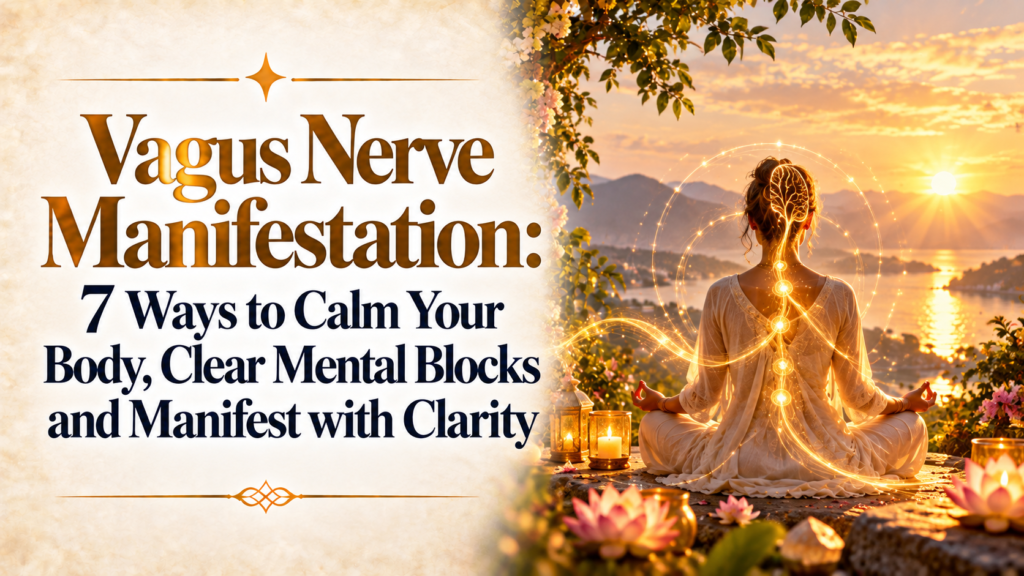
So this article uses the phrase vagus nerve manifestation in a grounded way. It does not claim that stimulating a nerve attracts money, love or opportunities from the universe. Instead, it explores a more practical chain:
A calmer body can make it easier to think clearly. Clearer thinking can make intention more specific. A more regulated emotional state can reduce impulsive reactions. Better attention can improve visualisation, communication and decision-making. And better decisions can support aligned action toward the life you want.
That is where nervous system regulation and manifestation can meet without confusing spirituality with medical science.
For readers who follow Dr Amiett Kumar, meditation, affirmation, visualisation, spirituality, the law of attraction, coaching, life coach content or manifestation techniques, this is a useful evolution of the usual conversation. Instead of asking only whether your thoughts are “positive enough,” you can learn to notice when your body is overloaded and create conditions in which your mind can work with greater clarity.
This is not about becoming calm all the time. It is about becoming flexible enough to return to yourself.
What Is the Vagus Nerve, and Why Is Everyone Talking About It?
The vagus nerve is the tenth cranial nerve and one of the major pathways of the parasympathetic nervous system. It travels from the brainstem through the neck into the chest and abdomen, communicating with structures involved in heart rate, breathing, digestion and other automatic functions.
Because the parasympathetic nervous system supports rest, digestion and recovery, the vagus nerve has become a popular symbol for nervous system regulation. Social media often describes “high vagal tone,” “vagus nerve activation” or a “vagus nerve reset” as if there is one simple switch that moves the body from stress to peace.
Real physiology is more complex. The autonomic nervous system is constantly adjusting; the body does not simply have a ‘stress mode’ and a ‘calm mode’ with one button between them. Sympathetic activation is not automatically bad because it helps us respond to challenges, exercise, perform and protect ourselves, while parasympathetic activity is not automatically good in every context. Health depends on flexibility, the ability to mobilise when necessary and recover when the challenge is over. Researchers often use heart-rate variability, or HRV, as one indirect marker related to autonomic regulation and vagal influences on the heart. Slow breathing has been associated with short-term improvements in some HRV measures and with reductions in heart rate and perceived stress, although HRV does not directly measure the entire ‘health of your vagus nerve’ and a higher number certainly does not guarantee manifestation success. The useful takeaway is simpler: the body has measurable pathways involved in arousal and recovery, and some everyday practices can help many people shift toward a calmer state. That matters because manifestation is difficult to practise wisely when every intention becomes a source of pressure.
Why Stress Can Feel Like a Manifestation Block
Manifestation content sometimes describes stress as “low vibration,” “resistance” or a “block.” Those phrases can be meaningful within a spiritual framework, but they can also become harmful if they imply that anxious people are personally responsible for every unwanted event in their lives.
A more compassionate and practical framing is that stress can change what you notice, how you interpret uncertainty and what actions feel available.
If you are waiting for a job response and your nervous system is highly activated, silence may quickly become “I am being rejected.” If money feels uncertain, one unexpected expense may become “I will never be secure.” If a relationship conversation feels risky, you may either chase reassurance or avoid communication completely.
In these moments, manifestation is not failing because the universe detected a wrong vibration. Your attention may simply be narrowed by stress.
This is why mental clarity, emotional regulation and nervous system regulation matter. When the body settles enough, you may be better able to distinguish facts from fear, intention from compulsion, intuition from anxiety and action from desperation.
The seven practices below are designed around that distinction.
1. Use Slow Breathing Before You Use Affirmations
One of the most practical ways to begin is also one of the simplest: slow down the breath before trying to change the thought.
Slow-paced breathing has been studied for its effects on heart rate, heart-rate variability and emotional state. Systematic reviews and meta-analyses suggest that deliberately slower breathing can increase measures associated with parasympathetic regulation and may help people feel calmer. The research does not prove that breathing “resets” the vagus nerve, but it does support slow breathing as a low-tech way to influence autonomic state.
For manifestation, timing matters. Many people start with affirmations while their body is already in high alert. They repeat, ‘Money comes to me easily,’ while internally feeling panic, or say, ‘Everything is working out for me,’ while their mind is searching for evidence that nothing is working. This can create internal friction, which is why it can help to begin with regulation instead.
Sit comfortably and breathe at an easy pace. There is no need to force giant breaths. Let the inhale be comfortable and allow the exhale to become slightly slower or longer if that feels natural. Continue for a few minutes and notice whether the shoulders soften, the face relaxes or thoughts become a little less urgent.
Then introduce the affirmation.
The affirmation may also work better when it is believable enough to enter the nervous system without immediate resistance. Instead of “I am instantly wealthy,” try something like, “I am learning to make calmer and wiser financial decisions.” Instead of “Nothing can affect me,” try, “I can return to calm even when life feels uncertain.”
This is not weaker manifestation; it is more integrated manifestation. You are not using words to overpower your body. You are giving the body enough safety to hear the words.
A simple five-minute practice can look like this: spend the first three minutes breathing slowly without chasing a special sensation, then spend two minutes repeating one affirmation that supports the identity you are trying to build.
For example, your affirmation might be ‘I choose clarity before urgency,’ ‘I can want more without living in panic,’ or ‘I am becoming someone who responds rather than reacts.’ The goal is not to force positivity. The goal is to pair intention with a physiological state in which reflection becomes easier.
2. Practise Meditation as Attention Training, Not as an Escape
Meditation is often marketed as a way to “switch off” the mind. That expectation causes unnecessary frustration because minds think. Meditation does not require perfect silence.
A more useful definition of meditation is attention training. You notice the breath, body, sound or chosen object; the mind moves, you notice that movement, and then you return. That repeated return is what makes meditation relevant to nervous system manifestation.
When people feel anxious about a desire, attention can become compulsive. They check. They compare. They rehearse worst-case scenarios. They watch more manifestation videos. They ask whether the technique is working. The desire becomes a monitoring project.
Meditation interrupts that cycle by helping you observe an urge without immediately acting on it.
The evidence on meditation is not magical, but it is meaningful. Research reviews have found that mindfulness meditation programs can produce small to moderate improvements in some measures of anxiety, stress and psychological distress for some people. Effects vary, and meditation is not a substitute for treatment when someone has a mental-health condition. It can also feel uncomfortable for some people, particularly when they are dealing with trauma or intense anxiety.
For everyday manifestation practice, use meditation to build space.
Try ten minutes. Sit somewhere reasonably quiet. Feel the contact of your feet or body with the chair or floor. Notice breathing without trying to perform it perfectly. When a thought about your desire appears, do not argue with it. Name it softly: “planning,” “worrying,” “checking,” “imagining.” Then return.
After several minutes, ask one question: ‘What would the calm version of me do next?’ This question is powerful because it connects inner state with behaviour. The answer may be to send the application, stop sending messages, review the budget, study, sleep, or finally have the conversation you have been avoiding. Meditation for manifestation is most useful when it reduces noise enough for action to become obvious.
3. Use Voice, Humming or Mantra as a Rhythm of Regulation
Humming, chanting and singing have become popular in vagus nerve content because the vagus nerve is involved with structures in the throat and voice, and vocalisation changes breathing patterns. Some small studies and physiological observations suggest that chanting or humming may affect breathing rhythm and heart-rate variability, although the evidence is not strong enough to support dramatic claims that humming directly “heals” the vagus nerve.
You do not need dramatic medical claims for humming, chanting or singing to be useful. Voice creates rhythm, rhythm can slow the breath, sound can anchor attention and repetition can organise the mind. This is one reason mantra traditions have existed for centuries in spiritual practice. The value of mantra does not depend on turning it into a medical hack.
Choose a simple phrase that has emotional meaning. It can be spiritual, secular or connected with your manifestation intention. You might repeat ‘I am safe enough to slow down,’ ‘I release urgency and return to clarity,’ ‘Shanti,’ ‘Thank you,’ or a traditional mantra that belongs to your own spiritual practice.
The method is simple: breathe naturally, then hum or chant softly on a comfortable exhale without straining the throat. Notice the vibration and the lengthening of the breath, continue for two to five minutes, and then stop. The silence immediately after sound can feel unusually clear, which can be a useful moment for visualisation. This sequence can be more effective than jumping directly from a chaotic day into a complicated manifestation ritual because you create rhythm before you imagine. For people interested in affirmation, meditation for manifestation, spirituality and subconscious mind work, the repeated phrase is best understood as an attentional cue that helps organise inner experience rather than as a command to the universe.
4. Build “Safety Signals” Into Your Environment
Many people think nervous system regulation is something they do for ten minutes and then stop.
A breathing exercise can help, but your environment is regulating you all day.
Lighting, noise, notifications, clutter, social conflict, sleep, caffeine, deadlines, financial uncertainty and constant content all influence your level of arousal.
This is why the question “How do I activate my vagus nerve?” may be less useful than “What keeps telling my body that everything is urgent?”
That question often reveals more than another wellness hack. Maybe your phone is the first thing you touch in the morning and the last thing you see at night. Maybe every notification is enabled, you work with five tabs and three chats while a video plays in the background, your manifestation journal sits beside unpaid bills you refuse to open, or you tell yourself you want peace while consuming outrage for two hours a day.
A regulated life does not require a perfect environment. It requires enough signals of order that the body does not have to treat every moment like an emergency. Create a small ‘manifestation environment’ rather than relying on willpower: use one chair or corner for meditation and visualisation, keep the phone outside that space, use softer light if possible, keep your journal there, and clear only the immediate surface if clutter makes you tense. Digital safety signals matter too. Turn off non-essential notifications, stop reading stressful messages immediately before meditation, avoid asking the same manifestation question repeatedly through AI or social media, and choose specific times for checking updates instead of living inside continuous monitoring. Nervous system healing is often misunderstood online; the body does not need a perfect cocoon, but it does benefit from repeated experiences of challenge followed by recovery, and your environment can help create that rhythm.
5. Separate Intuition From Anxiety Before You Make a Decision
Manifestation communities often value intuition, and that can be helpful. But anxiety and intuition can feel similar because both can arrive as strong inner signals: ‘I should message them now,’ ‘I should cancel everything,’ ‘This opportunity is meant for me,’ ‘This person is definitely thinking about me,’ or ‘This investment will change my life.’ When the body is activated, urgency can disguise itself as certainty.
Before treating a feeling as intuition, regulate first. Take several slow breaths, walk for ten minutes, meditate, and wait until the initial surge decreases. Then ask whether the message is still present and whether it makes sense in the context of evidence, values and consequences. Intuition often feels quieter than panic. Anxiety says, ‘Do something now or everything will go wrong,’ while clearer intuition may say, ‘This does not feel right; gather more information.’ Anxiety demands reassurance; clarity tolerates uncertainty. This distinction is especially important for money manifestation, relationships and high-stakes decisions. A manifestation framework should never encourage someone to ignore financial risk, consent, medical advice, legal reality or another person’s boundaries because they ‘felt a sign.’ The nervous system approach adds maturity to manifestation because you can respect intuition without worshipping every impulse.
A useful journaling practice is to create three simple categories: what I feel, what I know and what I can do next. Suppose you are waiting for a business opportunity. What you feel may be, ‘I am afraid the client will disappear.’ What you know may be, ‘They said they will respond by Friday, and today is Wednesday.’ What you can do next may be, ‘Prepare the proposal, continue outreach and follow up on Friday.’ This brings manifestation out of helpless waiting and back into aligned action.
6. Visualise the Process After the Body Settles
Visualisation is one of the most popular manifestation techniques, but it is often used only to imagine the final reward: the house, the money, the relationship, the stage, the offer letter or the ideal body. Those images can create motivation, but they can also become fantasy if they are disconnected from behaviour.
A stronger practice is process visualisation.
First settle the body with slow breathing or meditation. Then imagine the desired outcome briefly. After that, move the mental movie backward and visualise yourself doing the behaviours that make the outcome more possible.
If you want career growth, do not only see yourself receiving the promotion. See yourself preparing the presentation, asking for feedback, learning the skill, having the difficult conversation and returning after a disappointing day.
If you want financial abundance, do not only see the bank balance. Imagine opening your accounts without avoidance, reviewing spending, building income skills, negotiating confidently and following your plan consistently.
If you want a healthy relationship, do not only imagine a romantic scene. Visualise yourself communicating clearly, respecting boundaries, noticing red flags, apologising when needed and choosing mutual effort.
This matters because the nervous system learns through repeated experience, but mental imagery is not identical to real experience and should not be presented as a guaranteed method for changing biology or external reality. Still, mental rehearsal is widely used in performance settings because imagining a process can help prepare attention and behaviour.
For manifestation, the key is to use visualisation as rehearsal rather than escape.
After the visualisation, write one action not seven, not an entire life plan, just one concrete next step and then do it. This is how visualisation, subconscious mind work and real-world execution begin to support each other.
7. Replace Desperate Manifestation With a Regulation-to-Action Ritual
The final step is to turn all the previous practices into a simple routine. You do not need 27 techniques; you need a sequence that you can repeat. A grounded vagus nerve manifestation routine can take about fifteen minutes.
Begin with three minutes of slow, comfortable breathing without trying to ‘activate’ anything; simply allow the pace to slow. Spend the next four minutes in meditation or body awareness, noticing where urgency sits in the body and relaxing what can be relaxed without forcing it. Use two minutes for one realistic, identity-based affirmation or mantra, then spend three minutes visualising the process connected with your goal. Finish with three minutes of planning and write one action you will complete today. The sequence is simple: Regulate → Clarify → Rehearse → Act.
Many people practise the reverse: they act impulsively, panic, and then search for a manifestation technique to make the consequences disappear. Regulation-first manifestation creates a different relationship with desire. You can want something deeply without treating its absence as an emergency, pursue money without making every number a threat, desire love without abandoning boundaries, want recognition without compulsively checking metrics, and visualise a future while still living responsibly in the present. This is the real power of combining nervous system regulation with manifestation: it reduces the gap between the person you imagine becoming and the person who makes decisions today.
The Truth About “Vagus Nerve Reset” Hacks
Because the keyword vagus nerve reset is widely searched, it is worth addressing directly.
There is no established medical concept in which a healthy person manually “resets” the vagus nerve through one social-media trick.
Slow breathing, relaxation, meditation, singing, exercise, sleep and social connection may influence stress and autonomic regulation through multiple pathways. Some practices may be associated with changes in HRV or parasympathetic activity. That is very different from saying a person can push a hidden button and reset their nervous system instantly.
Be particularly cautious with advice that involves strong pressure on the neck, aggressive cold exposure, electrical devices sold without clear evidence, or claims that a DIY technique can cure anxiety, depression, trauma, digestive disease or other medical problems. Clinical vagus nerve stimulation is real, but it is a medical treatment used for particular conditions and is not the same as wellness content. For everyday stress, the safest starting points are often boring because they work through fundamentals: breathing, sleep, movement, reducing overstimulation, meaningful social connection and appropriate professional care when needed. Manifestation does not become less spiritual when it becomes more responsible.
Nervous System Regulation Is Not the Same as Being Calm All the Time
One of the biggest misconceptions in wellness culture is that regulation means permanent calm. That is impossible and not even desirable. You need activation to perform, exercise, speak on stage, defend a boundary and respond to danger. The goal is not to eliminate stress; the goal is flexibility.
A better question is whether your body can activate and then recover, whether disappointment can happen without destroying your entire week, whether uncertainty can exist without forcing you into compulsive action, and whether you can feel fear and still choose wisely. This is a better definition of nervous system manifestation than ‘always stay in a high vibration.’ A resilient manifestor is not someone who never experiences anxiety; it is someone who knows anxiety does not have to make every decision.
How the Subconscious Mind Fits Into This
The phrase subconscious mind is used broadly in self-help. In everyday language, it usually refers to automatic beliefs, learned associations, habits and reactions that influence us without requiring constant conscious thought.
This can be useful as long as we do not turn the subconscious into a magical storage system that controls the universe.
Suppose you grew up hearing, ‘Money always disappears.’ That sentence may become an automatic expectation. Later, when income increases, you may still avoid budgeting, feel guilty about receiving, overspend after stress or assume stability will not last. The manifestation response is sometimes to replace the old sentence with a positive affirmation. That may be helpful, but behaviour must join the process, and a regulated state can make reprogramming more practical because you are less likely to fight the new belief immediately.
For example, the old belief ‘If I slow down, I will fall behind’ can be paired with the bridge belief ‘Rest can improve the quality of my decisions,’ followed by the action of protecting one evening from work messages. The old belief ‘Money conversations are dangerous’ can become ‘I can look at money information one step at a time,’ followed by reviewing one account for ten minutes. And the old belief ‘If someone does not reply, I am being rejected’ can become ‘Silence does not tell me the whole story,’ followed by waiting, returning attention to your day and communicating respectfully when appropriate.
This is subconscious reprogramming in a grounded form: new language, new emotional experience and repeated new behaviour.
Vagus Nerve Manifestation and the Law of Attraction
The law of attraction is often described as the idea that thoughts, emotions and energetic alignment influence what a person attracts into life. That is a spiritual or self-development framework, not an established scientific law in the physics sense, and the vagus nerve should not be used to make the law of attraction sound scientifically proven. A more honest connection is behavioural.
When you are calmer, you may communicate differently, and when you communicate differently, relationships may change. When you regulate fear, you may take opportunities you previously avoided. When you reduce compulsive checking, you may focus long enough to build a skill. When you visualise a process, you may become more prepared to execute it, and when you sleep better and reduce overstimulation, your decisions may improve. These pathways are real enough to make manifestation useful without claiming that vagal activity sends wishes into the universe.
For people who hold a spiritual belief in manifestation, nervous system regulation can still deepen the practice by making it less desperate and more embodied. Spirituality does not require abandoning discernment.
A 7-Day Nervous System Manifestation Reset
If you want to experience the approach rather than only read about it, try a seven-day experiment. On Day 1, notice your baseline without trying to change anything; pay attention to when you feel most rushed, reactive or compulsive around your goals. On Day 2, add five minutes of slow breathing before your usual affirmation practice. On Day 3, remove one major source of unnecessary stimulation from your manifestation routine, such as keeping the phone outside the room or avoiding social media for thirty minutes before meditation.
On Day 4, use humming, mantra or gentle vocalisation for a few minutes and notice what happens to breathing and attention. On Day 5, practise the ‘What I feel / What I know / What I can do next’ journaling method around one current desire. On Day 6, use process visualisation and imagine not only receiving the outcome but behaving like the version of you capable of sustaining it. On Day 7, review the week without asking whether the universe sent you proof. Instead ask whether you are calmer, whether your thinking is clearer, whether impulsive behaviour reduced, whether you took more useful action and whether you feel less dependent on signs.
That is a meaningful result. If external results follow, evaluate them realistically. If they do not, the week can still be valuable because you strengthened attention, emotional regulation and decision-making.
Signs You May Be Manifesting From Anxiety Instead of Clarity
There is an important difference between desire and desperation.
You may be manifesting from anxiety when you repeatedly change techniques because nothing feels fast enough, consume hours of manifestation content instead of acting, check a person’s messages or social media compulsively, interpret every random event as a sign, spend money irresponsibly on promises of guaranteed outcomes, or blame yourself for having a negative thought.
Clarity looks different. You can hold an intention without monitoring it every hour, use an affirmation without demanding that it erase every uncomfortable emotion, and visualise without avoiding practical reality. You can believe in possibility and still ask for evidence, be spiritual and still respect another person’s autonomy, want abundance and still build a budget, and trust your intuition while still verifying important facts. This balance is where nervous system regulation becomes one of the most useful additions to modern manifestation practice.
When Breathwork or Meditation Is Not Enough
A wellness article should not imply that every form of distress can be solved through breathing.
If you experience persistent anxiety, panic attacks, fainting, unexplained heart symptoms, severe depression, trauma symptoms, major sleep disruption, digestive problems or other concerning symptoms, appropriate medical or mental-health care matters.
The vagus nerve is involved in many bodily systems, but symptoms do not automatically mean that your vagus nerve needs “healing.”
Likewise, meditation can sometimes increase discomfort, intrusive thoughts or anxiety for some people. If a practice repeatedly makes you feel worse, stop forcing it. A trauma-informed therapist, qualified clinician or appropriate health professional may be more useful than another online hack. Manifestation should never become a reason to delay care.
How Dr Amiett Kumar’s Manifestation Ecosystem Connects With This Topic
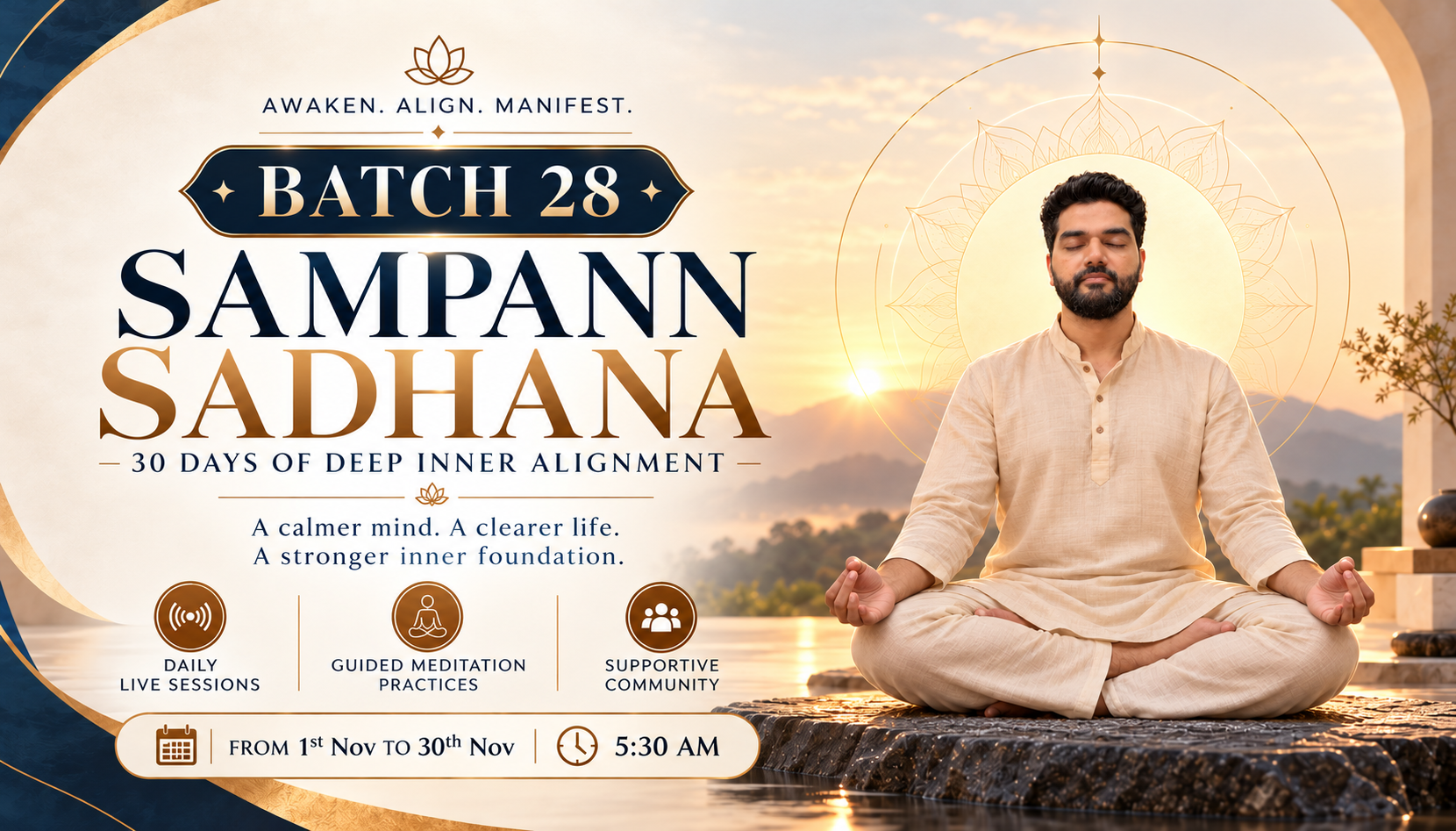
The Dr Amiett Kumar platform already brings together meditation, visualisation, breathwork, gratitude, subconscious mind work and structured manifestation practice. The website describes Sampann Sadhana as a guided practice that combines meditation, visualisation, breathwork and gratitude, while Manifest Anything Academy includes Law of Attraction, NLP, Ho’oponopono and other manifestation frameworks.
That makes nervous system regulation a natural supporting topic within the Dr Amiett Kumar manifestation ecosystem. It can sit before the technique: before the affirmation, settle; before the vision board, clarify; before the manifestation method, regulate. Before asking “How do I manifest?” ask a more grounded question: “Can I think clearly enough to recognise what I can influence?”
This article also connects naturally with existing AmiettKumar.com content on AI Overload and Manifestation, Subconscious Mind Reprogramming for Manifestation, How Stress and Anxiety Lower Your Vibration and Stop Manifestation, the 369 Manifestation Method, and the Whisper Method. The common theme is not that every technique is scientifically proven to attract external events; the common theme is deliberate attention.
Frequently Asked Questions
What is vagus nerve manifestation?
Vagus nerve manifestation is a modern wellness phrase that combines nervous system regulation practices with manifestation habits such as meditation, affirmation and visualisation. There is no scientific evidence that stimulating the vagus nerve directly manifests external outcomes. The useful connection is that a calmer, more regulated state may support clearer thinking, attention and behaviour.
Can you really reset the vagus nerve?
Not in the simple social-media sense. The vagus nerve does not work like a device that can be instantly rebooted. Slow breathing and other relaxation practices may influence parasympathetic activity and heart-rate variability, but claims of an instant “vagus nerve reset” are usually overstated.
Does slow breathing activate the vagus nerve?
Slow breathing can influence autonomic regulation and is associated with changes in heart-rate variability and parasympathetic activity. It is more accurate to say slow breathing can support a calmer autonomic state than to claim it directly “heals” or permanently resets the vagus nerve.
What is the best breathing technique for manifestation?
There is no scientifically established best manifestation breathing technique. A simple approach is comfortable slow breathing for a few minutes before meditation, affirmations or visualisation. Avoid forcing the breath or holding it in uncomfortable ways.
Can humming stimulate the vagus nerve?
Humming and chanting change breathing and vocal patterns and may support relaxation. Some evidence suggests relationships with heart-rate variability, but strong claims that humming directly resets or heals the vagus nerve go beyond current evidence.
Can nervous system regulation remove manifestation blocks?
It can help reduce stress, impulsive reactions and mental noise, which may make some “blocks” easier to understand and address. It does not guarantee an external manifestation outcome.
Is manifestation scientifically proven?
Manifestation as a claim that thoughts alone directly attract specific external events is not scientifically established. Practices used within manifestation such as goal setting, mental rehearsal, meditation, gratitude and changing habits can still be useful through psychological and behavioural pathways.
How do I know if it is intuition or anxiety?
Regulate first and decide second. Anxiety often feels urgent, catastrophic and dependent on immediate reassurance. Clearer intuition may remain after the emotional surge settles and should still be considered alongside evidence, values and consequences.
Can I practise vagus nerve manifestation every day?
Gentle practices such as comfortable slow breathing, meditation, journaling and visualisation can be used regularly by many healthy adults. If breathing or meditation causes dizziness, panic or significant discomfort, stop and seek appropriate professional guidance.
What should I avoid?
Avoid risky DIY neck pressure, extreme cold exposure, unverified electrical stimulation devices, or claims that one technique can cure anxiety, depression, trauma or medical conditions. Do not use manifestation practices as a replacement for medical, psychological, financial or legal advice.
Final Thoughts
The most useful lesson in vagus nerve manifestation is not that one nerve controls your destiny; it is that your body participates in your decisions. When your nervous system is overloaded, everything can feel urgent: a delayed message can feel like rejection, a financial problem can feel permanent, a difficult conversation can feel dangerous, and a manifestation goal can begin to feel like something that must happen immediately in order for you to be okay.
Inside that space, affirmation becomes less desperate, visualisation becomes more realistic, meditation becomes less about escaping life, intuition becomes easier to examine, and aligned action becomes easier to see. That is why the sequence matters: calm the body enough to hear the mind, clarify the desire enough to choose the action, and then live in a way that supports what you say you want.
You do not need to be peaceful every moment, maintain a perfect vibration, or ‘reset’ yourself every time you feel stress. What matters more is the ability to return: return to the breath, return to the body, return to what is true, return to what you can influence, return to your values, and then continue. That is a manifestation practice strong enough to exist in the real world.
Table of Contents