Introduction: Why Everyone Is Talking About the Whisper Method
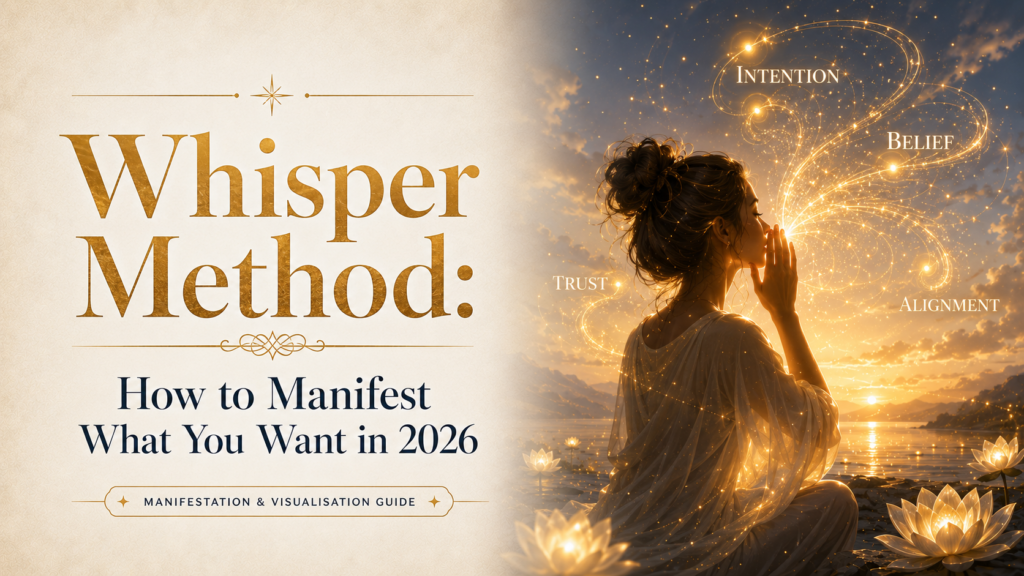
Manifestation trends change quickly. One month everyone is writing 369 affirmations; the next month people are talking about scripting, pillow methods, lucky-girl routines, vision boards or a new visualisation technique. In 2026, one of the most searched and discussed practices in the manifestation space is the Whisper Method: a short visualisation in which you imagine yourself approaching a person, quietly whispering a simple message into their ear, seeing the message received, and then letting the scene go.
The technique became popular through social-media manifestation culture because it is simple, private and emotionally vivid. You do not need a journal, a special object or a long ritual. You need a calm moment, a clear intention and the ability to imagine a brief scene. That simplicity is exactly why the Whisper Method attracts both beginners and experienced practitioners of the Law of Attraction, meditation, affirmation and visualisation.
But there is also a problem. Many online explanations present the method as if it gives you a remote control over another person. They promise that a crush will text, a boss will say yes, a partner will return or someone will suddenly think exactly what you want them to think. That is not a responsible way to use manifestation. There is no reliable scientific evidence that visualising a whisper can directly control another person’s mind, decisions or free will.
A better way to understand the Whisper Method is as a focused manifestation ritual that helps you clarify intention, rehearse a desired interaction, settle emotional noise and choose your next aligned action. Mental imagery research suggests that mentally simulating future behaviour can influence later behaviour, particularly when the imagery includes useful process or performance details. Self-affirmation research also suggests that reflecting on personally important values can sometimes help people respond to stress more constructively. Meditation can support calm attention. None of these findings prove telepathy. They do show why a short, vivid inner rehearsal may change you in useful ways.
That is the approach we will take in this guide. You will learn what the Whisper Method is, how to do it step by step, what to say, how to combine it with meditation and affirmation, common manifestation mistakes, why manifestation may feel delayed, and how to unblock manifestation when your practice becomes anxious or obsessive.
This is also where the larger teaching associated with Dr Amiett Kumar, the Amiett Kumar YouTube community and Readers Books Club becomes useful: manifestation works best when inner work is connected to real-world behaviour. Visualisation can clarify the future. Meditation can settle the mind. Affirmation can strengthen an intentional self-story. Spirituality can give meaning. Coaching can improve accountability. But the life you want still asks you to communicate, learn, decide, practise, apply, create, save, ask, negotiate, show up and grow.
If you have ever searched why manifestation is not working, why my manifestation is not working, why affirmations are not working, manifestation taking too long, reasons manifestation is delayed, or how to make the Law of Attraction work, this article is designed for you.
What Is the Whisper Method Manifestation Technique?
The Whisper Method is a visualisation-based manifestation practice. In its most common form, you relax, bring a specific person or situation to mind, imagine yourself standing near that person, mentally whisper a short positive message, picture the interaction resolving well, and then end the scene without repeatedly checking for proof.
The method is often used for communication: receiving a reply, having a calm conversation, being remembered for an opportunity, rebuilding confidence before a meeting or imagining mutual understanding in a relationship. Some people use it for money, a career or a business by visualising a client, recruiter, interviewer or collaborator hearing a simple message connected to the desired outcome.
The modern internet version is strongly associated with TikTok and other short-form platforms. Online communities sometimes connect it with Neville Goddard’s ideas about inner conversations, although the exact modern ritual is better understood as a contemporary social-media technique than as a formally established historical practice.
At its simplest, the Whisper Method contains five ingredients:
1. Intention – you decide what outcome or interaction matters.
2. Relaxation – you reduce mental noise before imagining.
3. Visualisation – you create a short scene in your mind.
4. A concise message – you mentally whisper one clear statement.
5. Release – you stop repeating the scene compulsively and return to life.
The final step is often the most difficult. Many people can visualise for two minutes but spend the next six hours asking, “Did it work?” That turns manifestation into anxious monitoring. The method is more useful when the scene helps you feel clearer, calmer and more intentional, and then you move forward with your day.
What the Whisper Method Is Not
Before learning the steps, it is important to remove three misunderstandings.
First, the Whisper Method is not proven mind control. Another person has independent thoughts, feelings, boundaries and choices. A visualisation practice should never be used to justify harassment, repeated unwanted contact, pressure, manipulation or ignoring a clear “no.”
Second, the method is not a substitute for communication. If you need to apologise, ask a question, send a professional follow-up, discuss a boundary or make an offer, the appropriate action may simply be to communicate respectfully. Visualisation can help you prepare for that conversation; it should not become a reason to avoid it forever.
Third, the Whisper Method is not a guarantee. Manifestation content often becomes harmful when every outcome is presented as completely controllable if you only “believe hard enough.” Real life includes other people, timing, systems, markets, health, chance, skills and circumstances. A grounded manifestation practice focuses strongly on the parts you can influence while accepting uncertainty around the parts you cannot.
This distinction does not make the method weaker. It makes it more useful. Instead of asking, “How can I force reality?” ask, “How can this practice help me become clearer, calmer and more aligned with the reality I want to build?”
Why the Whisper Method Feels So Powerful
A whisper is intimate. It is quieter than a speech, more focused than a long journal entry and more personal than a generic affirmation. The brain does not need a complicated scene to become emotionally involved. A few seconds of vivid imagery can create a sense of rehearsal: you see yourself calm, heard, confident and connected to the outcome.
Mental simulation has been studied far outside manifestation culture. A systematic review and meta-analysis of mental simulation research found an overall positive effect on behaviour, with benefits depending on what and how people imagined. Process simulations can be especially useful because they mentally rehearse the steps involved in reaching a goal rather than only enjoying the final reward.
That gives us a practical improvement to the Whisper Method. Do not visualise only the other person agreeing. Also visualise your own behaviour: your calm posture, respectful tone, preparation, follow-through and next action. If your goal is a job, imagine yourself preparing well and speaking clearly. If your goal is a relationship conversation, imagine yourself listening as well as speaking. If your goal is a client, imagine yourself delivering value, not only receiving payment.
The method may also feel powerful because it narrows attention. Instead of repeating ten conflicting desires, you focus on one short message. That can expose what you actually want. Sometimes the biggest manifestation block is not a lack of technique; it is a lack of clarity.
How to Do the Whisper Method Step by Step
Step 1: Choose One Clear Intention
Do not begin with a vague wish such as “I want my life to improve.” Choose one meaningful outcome or interaction. Examples include: “I want to have a calm conversation with my manager about growth,” “I want to feel confident when I present my proposal,” or “I want to communicate honestly with someone I care about.”
If another person is involved, frame the intention ethically. Focus on mutual communication, understanding or an opportunity to connect rather than on controlling their emotions. A healthy intention sounds like, “May this conversation open with respect and clarity,” not, “They must do exactly what I want.”
Clarity also helps SEO-style questions that people ask in real life: why manifestation is not working is often answered by discovering that the “manifestation” is too vague to guide action. You cannot align behaviour with a goal you have never defined.
Step 2: Settle Your Body Before You Visualise
Sit comfortably. Put your phone away. Take three to five slow breaths. Relax your jaw, shoulders and hands. You do not need a dramatic altered state. You only need enough quiet to stop jumping between notifications, worries and mental tabs.
This is where meditation supports the Whisper Method. NCCIH describes meditation as a group of practices that may involve focused attention, a word, breath, sound or visual image, often with the aim of calm and well-being. Research on meditation is mixed across different outcomes, so it should not be treated as a cure-all. But a brief meditation can be a useful transition from reactive thinking into deliberate attention.
Try this: inhale naturally, then make your exhale slightly longer. Notice the support of the chair or floor. Let the next sixty seconds be free from problem-solving. You are not trying to become “high vibration”. You are creating enough mental space to imagine intentionally.
Step 3: Picture the Person or Situation
Bring the relevant person to mind. If your goal does not involve another person, you can adapt the technique by imagining a symbolic listener: your future self, your audience, your client community, or even yourself looking into a mirror.
Do not worry if your visualisation is not cinematic. Some people see vivid images; others think in words, sensations or a general sense of presence. The practice does not require perfect mental pictures. Focus on what comes naturally: the room, the person’s face, the sound of your voice, the emotional tone or simply the idea of being there.
Step 4: Imagine Approaching Calmly
In the classic version, you imagine walking toward the person and standing beside them. Keep the scene short. You do not need to create a ten-minute movie.
Notice your own state. Are you approaching from desperation or calm? Are you trying to make them rescue your self-worth, or are you bringing a clear message? This is where the technique becomes a mirror. If you cannot imagine approaching without panic, the most useful manifestation work may be emotional regulation, self-worth, preparation or honest communication before you focus on the outcome.
Step 5: Whisper One Simple Message
The whisper should be short enough that you can remember it without effort. Avoid complicated paragraphs. Good messages are specific, positive and respectful.
For a career conversation, you might imagine: “You see the value I bring.” For a collaborative project: “Working together feels clear and beneficial.” For a relationship: “We communicate with honesty and respect.” For your own confidence: “I trust myself and speak clearly.”
Notice that these examples do not demand another person’s surrender. They orient the scene toward qualities you want to embody and experience.
Step 6: Feel the Scene, But Do Not Force Emotion
Many manifestation guides tell people they must generate enormous emotion or the technique will fail. That can create pressure. You do not need to manufacture euphoria. Aim for a believable emotional state: relief, calm, confidence, gratitude, openness or quiet certainty.
If the desired scene feels completely impossible, reduce the emotional distance. Instead of imagining, “They are obsessed with me,” imagine, “I can handle this conversation with maturity.” Instead of “I have ten crore rupees tomorrow,” imagine, “I am becoming more confident and capable with money.” This is similar to using bridge affirmations: statements that move you forward without requiring your mind to pretend something obviously untrue is already visible.
Step 7: See the Interaction End Well
Imagine the person hearing you. You may picture a nod, a calm expression or a respectful conversation unfolding. Then widen the visualisation to include your next responsible step.
If you want a job, see yourself sending the application. If you want a business opportunity, see yourself refining the proposal. If you want a relationship conversation, see yourself respecting the answer you receive. If you want money, see yourself budgeting, learning, selling, negotiating or creating value.
This addition transforms the method from fantasy into mental rehearsal.
Step 8: End the Practice and Release It
Take one breath and finish. You do not need to repeat the scene twenty times because you are afraid the universe did not hear you.
Release means you return to the present. It does not mean you stop caring. It means you stop checking every notification, number, dream or coincidence for proof. You let the practice influence your state, and then you live.
A good rule is: visualise briefly, act clearly, and check less.
Whisper Method Examples for Different Goals
For Career and Job Opportunities
Use the method before an interview, appraisal or proposal. Imagine the decision-maker seeing your competence and value. Whisper a message such as, “This is a strong fit,” or “You recognise what I can contribute.” Then visualise yourself answering questions calmly, researching the role and following up professionally.
The manifestation mistake to avoid is using the method instead of preparation. No amount of visualisation replaces learning the company, improving your portfolio or practising the interview.
For Money and Abundance
Instead of visualising a random person being forced to give you money, focus on value exchange. Imagine a client, customer or collaborator recognising the usefulness of your work. Whisper, “This creates real value for both of us.” Then visualise yourself pricing clearly, communicating benefits, improving your skill and managing money responsibly.
If you constantly ask why manifestation is taking too long, examine whether your financial goal also has a realistic path. Spirituality and practical planning can coexist.
For Love and Relationships
This is the area where ethics matter most. The internet often frames the Whisper Method as a way to “manifest a specific person”. A healthier approach is to visualise qualities of mutual connection: honesty, respect, warmth, accountability and willingness.
A whisper such as, “We communicate openly and respectfully,” is very different from imagining that someone has no choice but to return, text or commit. If the person has clearly rejected contact or established a boundary, respect it. Your manifestation practice can shift toward healing, self-worth and creating space for reciprocal love.
For Confidence and Self-Concept
You can use the method without another person at all. Imagine your future self sitting beside you. Whisper, “You can handle this.” “Your voice matters,” or “You are ready to take the next step.”
This version is often more empowering because the focus stays completely within your own agency.
The Whisper Method and Affirmation
The Whisper Method is essentially a visualised affirmation placed inside a scene. That means the quality of the message matters.
One reason people search why affirmations are not working is that they choose statements that feel disconnected from their current beliefs. Repeating “I am completely fearless” while your body is panicking may produce an internal argument. A more believable affirmation could be, “I can feel nervous and still take one courageous step.”
Research on self-affirmation is not the same as manifestation affirmations. In psychology, self-affirmation often involves reflecting on personally important values rather than repeating future claims. Studies and meta-analyses suggest small but meaningful benefits in areas such as stress response, message acceptance and behaviour, although effects vary by context.
The useful lesson is not “say any sentence and reality must obey.” It is that language can shape attention, meaning and self-perception. Choose a whisper that supports the person you want to become.
Try this formula:
I value + I choose + I act.
For example: “I value honest relationships. I choose calm communication. I act with self-respect.”
That is stronger than a sentence designed only to control someone else.
The Whisper Method and Visualisation
Visualisation is the heart of the technique. But there are two ways to visualise: outcome-only and process-based.
Outcome-only imagery shows the final scene: the message arrives, the money appears, the person says yes, the applause begins. It can feel motivating, but if you stop there, you may accidentally train yourself to enjoy the fantasy rather than build the path.
Process visualisation includes the behaviour that makes the outcome more likely: practising, communicating, preparing, exercising, saving, publishing, applying, learning or following up. Mental simulation research suggests that imagining useful processes can support later behaviour.
For manifestation, combine both. Spend perhaps twenty seconds seeing the desired outcome and another twenty seconds seeing yourself taking the next aligned step.
If you cannot visualise clearly, do not worry. You can use sound, feeling, written scripting or inner dialogue. The effectiveness of a self-development practice should not depend on whether your mind naturally produces high-definition images.
The Whisper Method and the Law of Attraction
Within the Law of Attraction, the Whisper Method is often described as a way to align thought, feeling and intention with the reality you want. From a spiritual perspective, practitioners may view the scene as an energetic rehearsal: you briefly inhabit the emotional quality of the desired outcome and then release resistance.
A grounded way to use this philosophy is to ask whether your inner and outer signals match. If you visualise respectful love but repeatedly accept disrespect, the issue is not that you need stronger visualisation. If you affirm abundance but avoid every conversation about money, the issue may be behaviour. If you visualise success but never practise the skill, there is an alignment gap.
How to make the Law of Attraction work is therefore not only a question of frequency or belief. It is also a question of coherence. Do your thoughts, emotions, choices, boundaries and habits point in roughly the same direction?
This approach fits the broader message found across Amiett Kumar’s manifestation content: intention becomes more useful when it is connected with meditation, visualisation, affirmation, gratitude and aligned action.
The Role of Meditation in the Whisper Method
Meditation can make the Whisper Method simpler because it helps reduce the noise around the intention. You do not need a twenty-minute meditation every time. Even two minutes can create a cleaner transition into visualisation.
Try this mini-practice:
1. Sit comfortably and close your eyes.
2. Notice five natural breaths.
3. On each exhale, soften one part of your body.
4. State your intention once.
5. Visualise the whisper scene for sixty to ninety seconds.
6. End with one sentence: “I release the outcome and return to my next right action.”
If meditation makes you more anxious, dissociated or distressed, stop and use a simpler grounding practice such as walking, looking around the room, stretching or slow breathing. Meditation is generally considered low risk, but negative experiences can occur for some people, and it should not replace appropriate medical or psychological care.
For those exploring spirituality, meditation also changes the emotional quality of manifestation. Instead of chasing a future reality, you practise becoming present enough to notice what your desire is teaching you now.
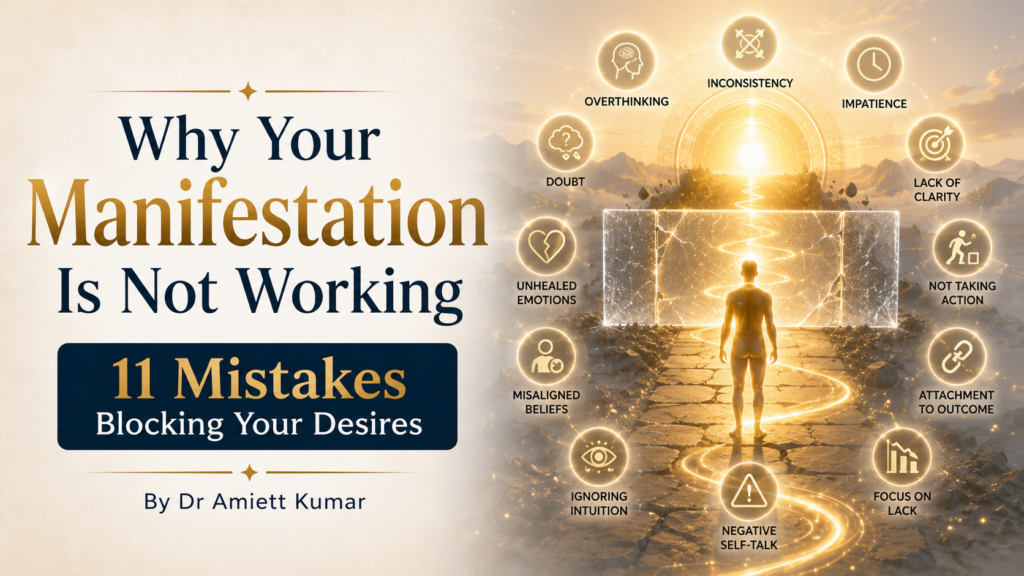
10 Common Whisper Method and Manifestation Mistakes
1. Trying to Control Another Person
This is the biggest mistake. The desire for connection can easily become the desire for control. Respect autonomy, consent and boundaries. Use the method to prepare yourself for healthy interaction, not to justify obsession.
2. Repeating the Technique All Day
If you perform the whisper every hour because you are terrified nothing will happen, the practice is no longer calming your mind. It is feeding anxiety. Choose a reasonable frequency, such as once a day for a few minutes, and then return to life.
3. Constantly Checking for Signs
A notification, number or song does not need to become evidence. When you measure every moment against the manifestation, you keep attention fixed on absence. This is a common reason people say manifestation is not working even while their real-life behaviour is improving.
4. Using Unbelievable Messages
If the whisper feels absurd, controlling or emotionally impossible, your mind may resist it. Use language that is aspirational but believable.
5. Skipping Real Communication
If an honest conversation is appropriate, have it. If a follow-up email is appropriate, send it. Manifestation should not become spiritual procrastination.
6. Visualising Only the Reward
Include the process. Visualise yourself becoming the person who can handle the outcome.
7. Ignoring Evidence and Boundaries
If someone has clearly said no, do not reinterpret the boundary as “the universe testing your faith.” Respect reality. A healthy spirituality should increase discernment, not erase it.
8. Changing Methods Every Two Days
When manifestation is taking too long, people often jump from the Whisper Method to 369, scripting, water technique, vision boards and subliminals. Constant switching can become another form of avoidance. Choose a small routine and observe it over time.
9. Believing Every Negative Emotion Blocks Results
You do not need to police your mind. Human beings experience fear, doubt, anger and disappointment. A difficult day is not a spiritual failure. Process the emotion, regain perspective and continue.
10. Taking No Aligned Action
This is one of the most common manifestation mistakes. Your practice should make the next step clearer. If it repeatedly replaces the next step, simplify the practice.
Why Is My Manifestation Not Working?
If you are asking why my manifestation is not working, use the Whisper Method as a diagnostic tool rather than another ritual to stack on top of everything else.
Ask yourself these questions:
Is my desire clear? A vague desire creates vague behaviour.
Is another person’s free choice central to the outcome? If yes, shift focus toward what you can control.
Do I believe the message enough to act from it? If not, use a bridge statement.
Am I taking the next practical step? Visualisation without behaviour may stay imaginary.
Am I overchecking? Constantly asking “Where is it?” can create stress and tunnel vision.
Does the goal need more time? Careers, businesses, health habits and relationships often involve timelines longer than social media suggests.
Do I need a skill, conversation or boundary rather than another technique? This question can save months of frustration.
Am I exhausted? Sometimes the answer to how to unblock manifestation is rest, not another ritual.
These questions also explain many reasons manifestation is delayed. Delay is not always spiritual resistance. It may be preparation, complexity, lack of clarity, inconsistent action, other people’s decisions, changing conditions or a goal that needs to be revised.
Why Manifestation Taking Too Long Can Become a Trap
The phrase manifestation taking too long appears frequently because people naturally want certainty. Social media intensifies the problem by compressing stories. A creator can say, “I did this method, and two days later they texted,” while leaving out months of previous communication, context and chance.
When you expect a universal deadline, every day becomes a scorecard. That creates pressure. Then pressure creates more rituals. More rituals create more checking. Soon the practice is no longer helping you move toward your goal; it is helping you monitor what has not happened.
Try measuring progress differently. Instead of asking only, “Did the final result arrive?” ask:
• Am I clearer about what I want?
• Am I more confident in communication?
• Have I taken more consistent action?
• Have I improved the relevant skill?
• Am I respecting myself more?
• Am I making better decisions?
• Am I less dependent on external reassurance?
These are meaningful shifts even before the final outcome.
How to Unblock Manifestation: The 7-Step Reset
If you feel stuck, do not immediately add another technique. Use this reset.
1. Stop All Extra Rituals for 24 Hours
Keep only normal life, sleep, food, movement and essential responsibilities. Notice what happens when you stop trying to “make” the manifestation happen.
2. Write the Goal in One Sentence
If you cannot state it clearly, you cannot align with it clearly. Make it specific enough to guide behaviour while leaving room for outcomes you cannot control.
3. Separate Control From Influence
Draw two columns. In one, write what you control: preparation, communication, habits, boundaries, applications, and learning. In the other, write what you influence but cannot guarantee: another person’s response, a hiring decision, timing, and the market.
4. Choose One Believable Affirmation
Make it a bridge between your current state and desired state. “I am learning to speak about my work with confidence” may be more useful than a sentence your mind instantly rejects.
5. Do One Whisper Visualisation
Keep it under two minutes. Include both the desired interaction and your next responsible action.
6. Take One Real-World Step Within 24 Hours
Send the email. Practise the interview. Update the profile. Make the budget. Book the appointment. Publish the page. Ask the question. Set the boundary.
7. Review Weekly, Not Hourly
Give the process enough space to produce information. Weekly reflection is more useful than checking every few minutes.
This is one practical answer to how to unblock manifestation: reduce noise, increase clarity and reconnect intention with behaviour.
A 7-Day Whisper Method Practice for 2026
If you want structure without obsession, try this seven-day experiment.
Day 1: Clarity
Write one desire and why it matters. Remove goals based mainly on comparison or pressure. Create one respectful whisper sentence.
Day 2: Meditation
Spend five minutes settling your mind before the visualisation. Notice whether the scene becomes clearer when you are less rushed.
Day 3: Self-Concept
Ask, “Who do I need to become to handle this outcome well?” Whisper the answer to your future self.
Day 4: Process Visualisation
Visualise the action before the result. See yourself doing the work, having the conversation or practising the skill.
Day 5: Detachment
Do the method once, then deliberately avoid checking for signs for the rest of the day. Put your attention into work, relationships, exercise or creativity.
Day 6: Aligned Action
Take one step you have been avoiding. Let the visualisation support courage rather than replace action.
Day 7: Review
Do not ask only whether the “manifestation arrived”. Review your clarity, behaviour, emotional state and decisions. Decide whether the practice is genuinely helping you.
If it is, keep it simple. If it is making you more obsessive, pause it.
Whisper Method, Spirituality and Detachment
In spirituality, detachment is often misunderstood as not caring. A healthier definition is caring without gripping. You can hold a desire and still remain available to the present moment. You can prepare seriously and still accept that life may surprise you.
The Whisper Method becomes spiritually useful when the whisper is followed by surrender. You have expressed the intention internally; now you return to your values. You stop trying to manipulate every sign.
This also protects against one of the most subtle Law of Attraction mistakes: turning spirituality into a constant evaluation of whether you are “aligned enough”. Spiritual practice should not make you afraid of your own thoughts. It should help you become more aware, compassionate and responsible.
When Coaching or a Life Coach Can Help
A manifestation technique is not always the right tool for the problem. You may know what you want but struggle with planning, consistency, confidence or accountability. In those situations, coaching can help turn a broad intention into measurable actions.
A life coach may help you identify priorities, challenge unhelpful patterns, create routines and review progress. A manifestation coach may integrate those practical tools with meditation, affirmation, visualisation and spiritual reflection.
The important question is whether the support helps you become more capable and autonomous. Good coaching should not make you dependent on constant reassurance or convince you that every setback is a mysterious energetic block.
If anxiety, depression, trauma, obsessive behaviour or another mental-health concern is significantly affecting daily life, choose appropriately qualified mental-health support. Coaching and manifestation content are not substitutes for clinical care.
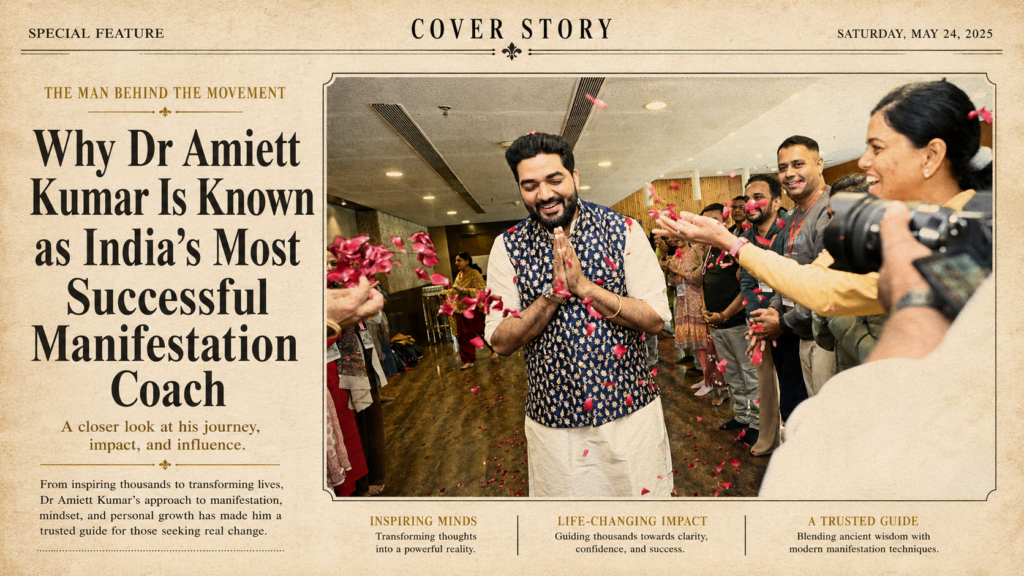
Dr Amiett Kumar, Manifest Anything and Readers Books Club
On AmiettKumar.com, Dr Amiett Kumar is presented as a holistic Law of Attraction and manifestation coach, YouTube creator, podcaster and founder of Readers Books Club. The site connects manifestation with meditation, affirmation, visualisation, spirituality, books and personal-development coaching.
That ecosystem gives the Whisper Method a useful context. A technique is only one tool. The larger goal is to develop a way of thinking and acting that supports long-term growth. Readers Books Club contributes the learning side through books and conversations. Meditation develops stillness. Affirmation develops intentional language. Visualisation develops mental rehearsal. Coaching develops structure and accountability. Action develops evidence.
The phrase manifest anything can be inspiring when it means expanding possibility and taking your potential seriously. It becomes less helpful if it is interpreted as “I can control every event or every person.” Mature manifestation includes ambition and acceptance at the same time.
For readers searching for phrases such as top manifestation coach, top manifestation coach – Amiett Kumar, or India’s best manifestation coach – Amiett Kumar, the most valuable question is not only who has the strongest title. Ask what teaching helps you become clearer, more disciplined, more peaceful and more effective in your actual life.
Frequently Asked Questions About the Whisper Method
What is the Whisper Method manifestation technique?
It is a short visualisation practice in which you imagine approaching a person, mentally whispering a clear message, visualising a positive interaction and then releasing the scene. It became popular through social media and is commonly discussed within Law of Attraction communities.
Does the Whisper Method really work?
There is no reliable scientific evidence that it can directly influence another person’s mind through telepathy. It may still be useful as a visualisation and mental-rehearsal exercise that clarifies intention, changes your emotional state and supports more confident behaviour.
How long should I do the Whisper Method?
A minute or two is enough. Longer is not automatically better. If the method becomes repetitive or anxiety-driven, shorten it or take a break.
How many times a day should I use it?
For most people, once a day is plenty for a self-development practice. The purpose is clarity, not compulsive repetition.
Can I use the Whisper Method for a specific person?
You can visualise respectful communication involving another person, but you should not treat the technique as a way to remove their autonomy or ignore boundaries. Focus on mutuality and your own conduct.
Can the Whisper Method manifest a text message?
You can use it to visualise calm communication, but it cannot guarantee that a specific person will send a message. If direct communication is appropriate and welcome, a respectful message may be more effective than waiting for a sign.
Can I use the Whisper Method for money?
Yes, but make the scene practical. Visualise a client, customer or opportunity recognising value, then take steps related to earning, learning, selling, saving or creating.
Why are affirmations not working with the Whisper Method?
The message may feel unbelievable, may conflict with your behaviour, or may be focused on controlling something outside your influence. Use a believable bridge affirmation and pair it with action.
What if I cannot visualise clearly?
Use words, inner dialogue, emotion or a written scene. Vivid imagery is not a requirement for reflection or goal setting.
Should I meditate before the Whisper Method?
You do not have to, but a brief meditation or breathing practice can reduce distraction and make the visualisation easier to focus on.
What if my manifestation is delayed?
Review clarity, behaviour, skills, timing, boundaries and what is outside your control. A delay does not automatically mean you are blocked or doing the technique incorrectly.
How do I detach after the Whisper Method?
Finish the visualisation, choose one meaningful action and return to the present. Avoid constantly looking for signs or checking whether the other person has changed.
Final Thoughts: Whisper Less, Live More
The Whisper Method is appealing because it is simple. In a noisy manifestation world filled with endless rituals, it gives you one clear scene and one clear message. Used well, that can be enough to organise attention, rehearse confidence and reconnect you with an intention.
The mistake is turning that simplicity into another obsession. You do not need to whisper harder. You do not need to control another person’s mind. You do not need to interpret every coincidence as proof. You need a clear desire, a calm mind, an ethical intention and the courage to live in alignment with what you say you want.
If the Whisper Method helps you become more confident before a conversation, more focused before an interview, more intentional in a relationship or more consistent with your goals, it has already served a practical purpose. If it becomes a way to avoid communication, ignore boundaries or spend your day waiting for magical proof, step back.
Manifestation is most useful when it expands life rather than shrinking it into a ritual.
Use meditation to become present. Use affirmation to choose your inner language. Use visualisation to rehearse possibility. Use spirituality to stay connected with meaning. Use coaching when you need structure. Use books and Readers Books Club when you need new ideas. And use action to meet the future you keep imagining.
The Whisper Method may begin with a sentence spoken silently in your mind. Your real transformation begins with what you do after you open your eyes.
Table of Contents